Impact of Comorbid Oppositional Defiant Disorder on the Clinical and Neuropsychological Characteristics of Korean Children With Attention-Deficit/Hyperactivity Disorder.
Kim Haewon, Jung Eunji, Lee Taeyeop, Kim Seonok, Kim Hyo-Won
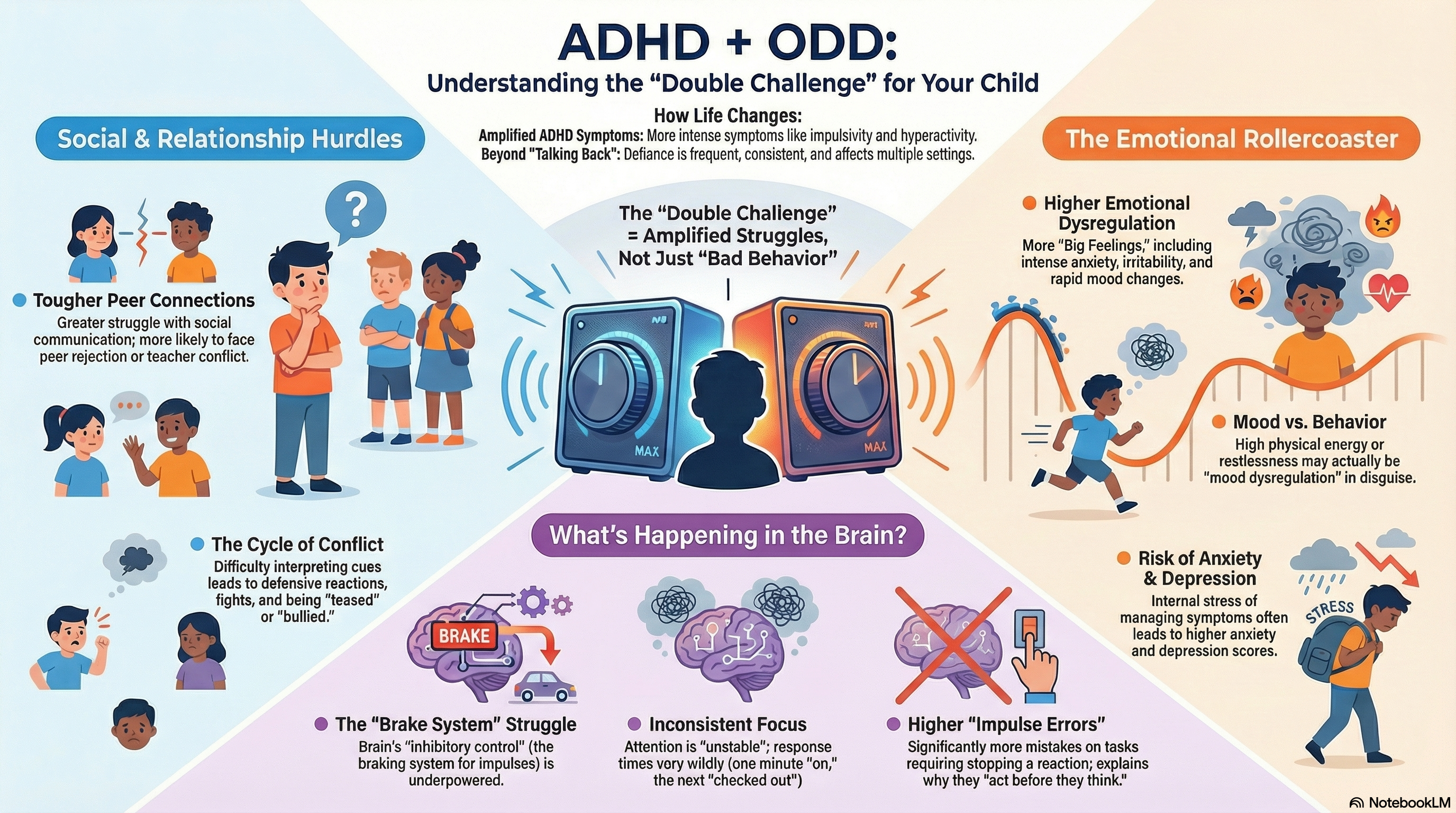
What This Paper Found
Researchers recently looked at how things change for children when they are navigating both ADHD and Oppositional Defiant Disorder (ODD) at the same time. While ADHD on its own brings plenty of challenges, this study found that adding ODD to the mix is like trying to guide a ship through much heavier swells. It isn’t just “more of the same”; it’s a different kind of neuropsychological weather that affects how a child interacts with the world.
The study highlighted that children with both diagnoses often face significantly steeper climbs when it comes to social relationships and emotional control. They tend to experience more intense outbursts and higher levels of impulsivity than children who only have ADHD. This research suggests that these behaviors aren’t about “willful defiance” in the traditional sense, but are linked to specific differences in how their brains process social communication and regulate reactions.
Because the combination of these conditions can be so taxing, it often takes a heavy toll on a child’s self-esteem. They may feel like they are constantly “off course” even when they are trying their best to keep up with peers and teachers. Recognizing these neuropsychological layers helps us see that these kids aren’t being “difficult” on purpose—they are working with a much more complex internal map.
Why This Matters for Your Family
If you feel like your parenting voyage is more exhausting than what other ADHD families describe, this research validates that feeling. When ODD is present, the social communication gaps can make school and friendships feel like a constant struggle for your child. It can feel like your family is perpetually stuck in stormy seas, where every transition or request has the potential to trigger a significant emotional event.
For co-parents, this is a vital reminder to stay on the same deck. It’s incredibly easy to blame one another when outbursts are intense or when social feedback from school is negative. Understanding that this is a recognized neuropsychological profile helps shift the focus from “fixing” the child to supporting the system. You aren’t failing as captains; you’re just navigating a particularly complex stretch of coastline that requires a more specialized set of charts.
When we understand that the intensity of ODD comes from a place of neurological overload, we can move away from shame and toward strategy. It allows us to advocate for our children not as “behavior problems,” but as students who need comprehensive support to manage their emotional regulation. This perspective can help lower the temperature at home and create a more validating environment for everyone on board.
What You Can Do Today
-
Shift the lens from defiance to difficulty. When an outburst happens, try to remind yourself (and your co-parent) that this is likely a lack of regulation skills rather than a personal attack. Viewing it as a “brain glitch” rather than a “power struggle” can help you stay calm at the helm.
-
Build safe harbors for social connection. Since social communication is a specific area of struggle, look for low-pressure ways for your child to connect with others. This might mean shorter playdates, activity-based gatherings where they don’t have to navigate “small talk,” or simply providing a quiet space to retreat to when they feel overwhelmed.
-
Advocate for a wider lighthouse beam. When talking to teachers or therapists, use this research to ask for “comprehensive support.” Ensure they understand that your child needs help with more than just focus and task completion—they need proactive strategies for emotional safety and relationship building in the classroom.
The Original Paper
Kim, H., Jung, E., Lee, T., Kim, S., & Kim, H. (2020). Impact of Comorbid Oppositional Defiant Disorder on the Clinical and Neuropsychological Characteristics of Korean Children With Attention-Deficit/Hyperactivity Disorder. Journal of Attention Disorders.
Safety Note: This research summary is for informational purposes only and does not constitute medical or therapeutic advice. Always consult qualified professionals for your family’s specific situation. If you or your child are in crisis, contact your local emergency services or one of these helplines: 988 Suicide & Crisis Lifeline (US) | Lifeline Australia: 13 11 14 | Samaritans UK: 116 123 | Need to Talk? NZ: 1737
Research Brief
Generated by NotebookLM from the original paper. Not a replacement for the peer-reviewed source.
Read Full Brief →