Coregulation: A Multilevel Approach via Biology and Behavior.
Bornstein Marc H, Esposito Gianluca
What This Paper Found
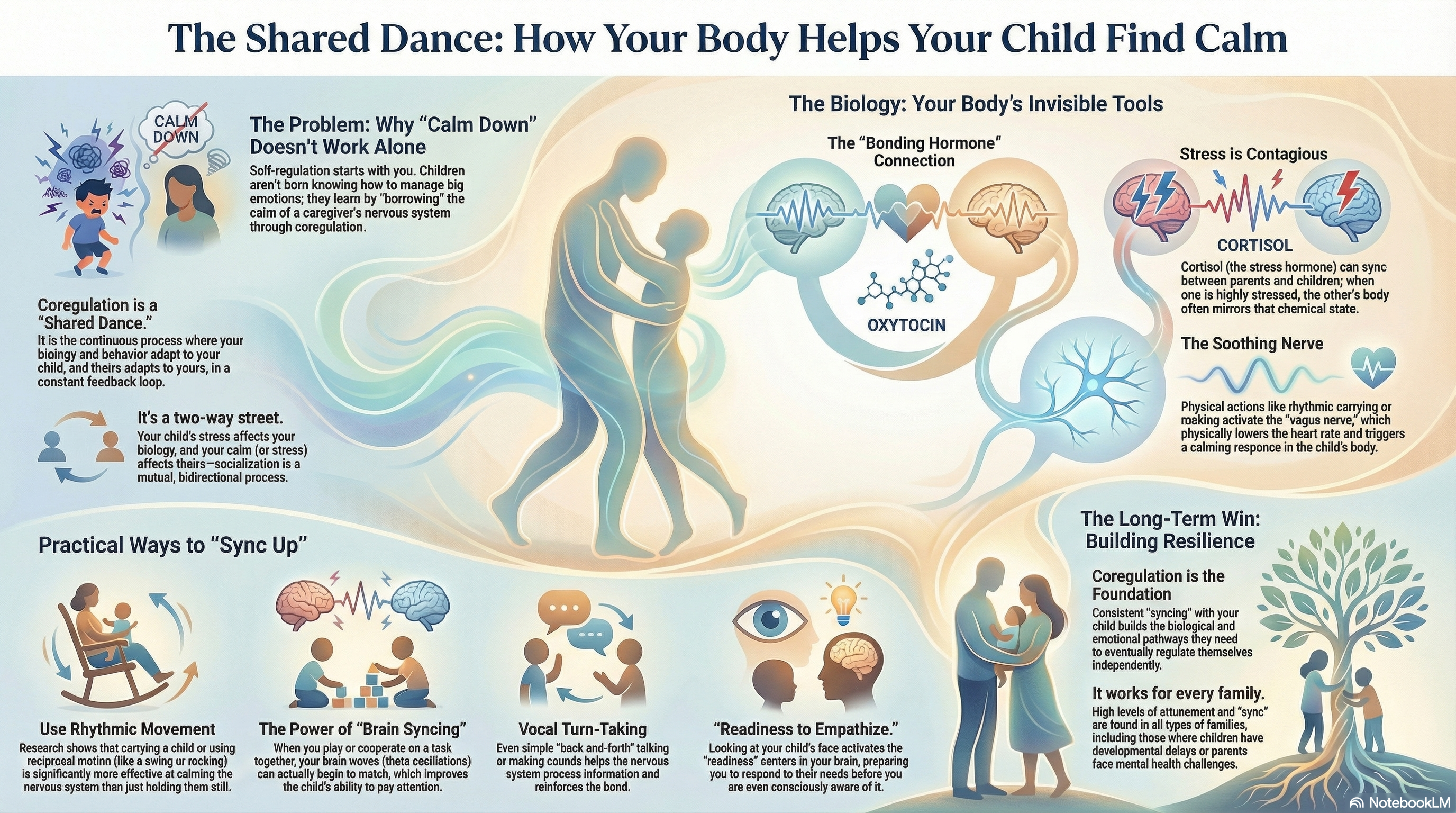
Research shows that your child’s ability to find their footing doesn’t happen in a vacuum. It’s a process called coregulation, where your bodies and brains actually begin to sync up during your daily interactions. Think of it like two ships sailing in close formation; when the lead vessel finds calm, the second ship can more easily follow that same rhythm.
This isn’t just about “good behavior” or following rules. It goes much deeper into your biology. The researchers found that our hormones and brain activity influence one another in real-time. When you are close to your child, their nervous system “borrows” the stability of yours to help them settle their own internal state.
Ultimately, the paper suggests that calmness isn’t a solo achievement for a child. It’s a shared process where both you and your child are constantly adjusting to each other’s signals. It is a biological partnership where your presence acts as a physiological template for their own emotional regulation.
Why This Matters for Your Family
For those of us navigating the often unpredictable waters of ADHD, Autism, or PDA, this is a massive relief. Our kids often have internal systems that are easily disrupted by sensory overload or big emotions. Knowing that their biology is looking to ours for stability helps us see meltdowns not as defiance, but as a biological request for a partner to help them regulate.
This also shifts how we approach co-parenting. If the two captains on the bridge are running on high stress or conflict, that biological “sync” becomes much harder for the child to access. When we focus on our own regulation and how we interact with our co-parent, we provide a much more stable environment for our children to find their own balance.
It’s important to remember that this isn’t about being a perfect parent who never gets upset. Coregulation is about the “repair”—showing your child that even when things feel chaotic, you can find your way back to a steady state together. It’s a dance of adjustment, not a performance of perfection.
What You Can Do Today
- Check your own barometer first. Before stepping in to “fix” a meltdown, take three slow breaths to steady your own nervous system so your child has a calm rhythm to mirror.
- Prioritize physical “anchoring” over words. In moments of high distress, simply sitting quietly nearby or offering a firm, grounding touch often does more biological work for a neurodivergent child than a long, verbal explanation.
- Find a shared rhythm in the quiet moments. Use low-demand activities like coloring or side-by-side play to practice “syncing up” when things are calm, which builds the biological foundation for more challenging times.
The Original Paper
Bornstein, M. H., & Esposito, G. Coregulation: A Multilevel Approach via Biology and Behavior.
Safety Note: This research summary is for informational purposes only and does not constitute medical or therapeutic advice. Always consult qualified professionals for your family’s specific situation. If you or your child are in crisis, contact your local emergency services or one of these helplines: 988 Suicide & Crisis Lifeline (US) | Lifeline Australia: 13 11 14 | Samaritans UK: 116 123 | Need to Talk? NZ: 1737
Research Brief
Generated by NotebookLM from the original paper. Not a replacement for the peer-reviewed source.
Read Full Brief →