Effects of Parent-Implemented Interventions on Outcomes of Children with Autism: A Meta-Analysis.
Cheng Wai Man, Smith Timothy B, Butler Marshall, Taylor Tina M, Clayton Devan
What This Paper Found
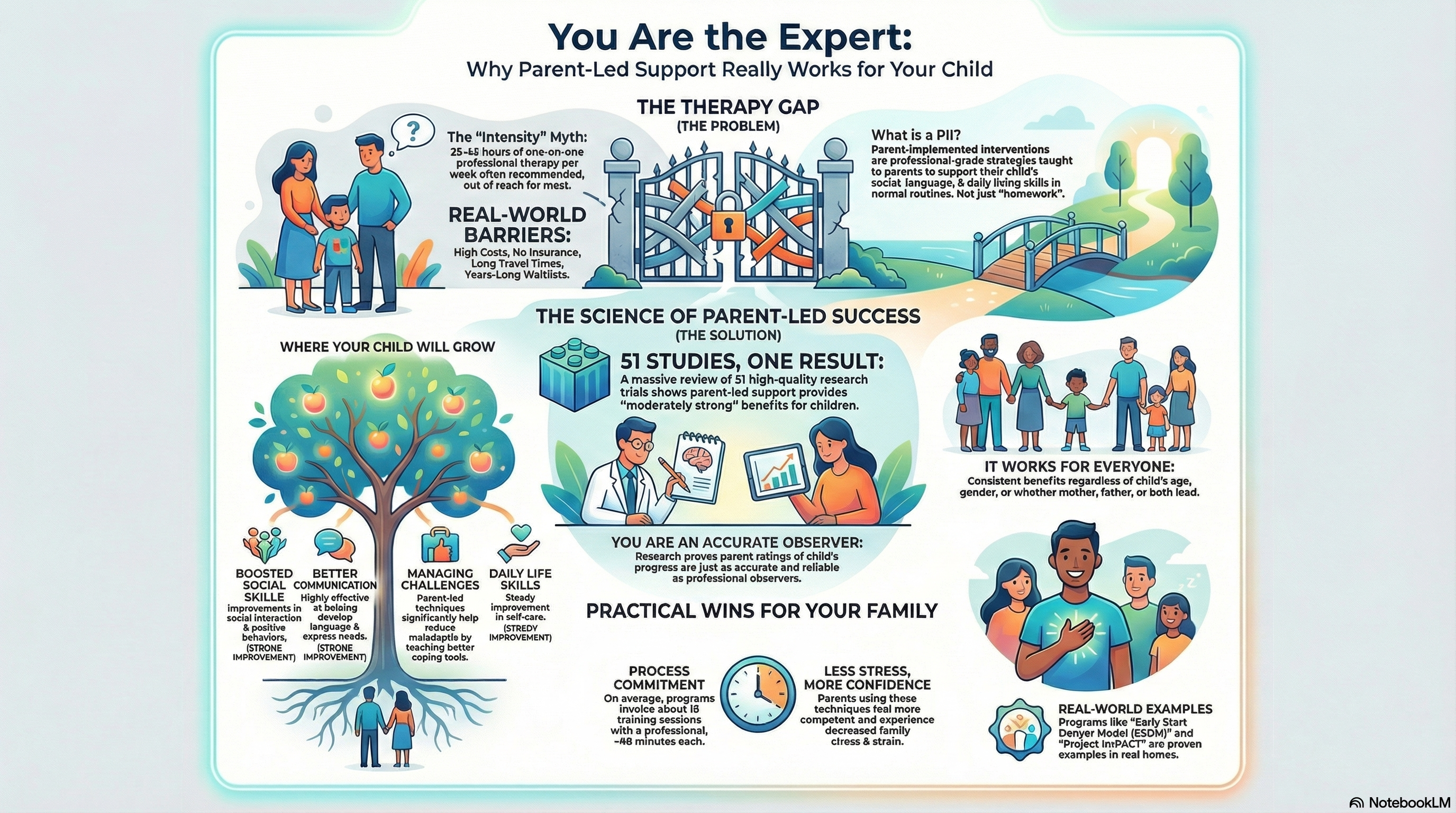
Researchers looked at over fifty different studies to see what happens when parents—rather than just therapists—take the lead on supporting their autistic child’s development. They found that when parents are coached in specific strategies, children show significant growth in how they communicate, interact socially, and manage big behaviors. It’s a powerful reminder that you don’t need a clinical degree to be the most effective navigator for your child’s journey.
The study showed that these parent-led strategies work across all sorts of different families and situations. Whether you are working on life skills or language, the progress is real and measurable. While professional therapy is a vital resource, the research confirms that the small, intentional interactions you have every day in your own “home port” are where some of the most meaningful progress happens.
Why This Matters for Your Family
For many of us, getting to a clinic or finding a specialist can feel like trying to navigate through a thick fog with a broken compass. Waitlists are long, and the cost can be overwhelming. This research offers a bit of blue sky: it proves that you are more than capable of helping your child thrive right where you are. When you are coached to use therapeutic techniques during your normal daily routines—like breakfast or bathtime—those strategies become part of the rhythm of your life rather than another “chore” on the list.
This is also a game-changer for co-parenting. If you and your co-parent can both learn these coached techniques, your child gets a consistent experience as they move between two homes. It stops “therapy” from being something that only happens for one hour a week in a sterile room and turns it into a shared language that both captains can use to keep the ship steady. It’s not about becoming a therapist; it’s about having the right tools on your own vessel.
What You Can Do Today
- Ask about “Parent Coaching” models. Next time you speak with a provider, ask if they offer sessions where they teach you the strategies to use at home, rather than just working one-on-one with your child.
- Pick one routine to anchor a new skill. Choose a predictable part of your day—like the morning commute or getting ready for bed—and practice one specific social or communication goal during that time for just five minutes.
- Share the “win” with your co-parent. If you find a strategy that works to reduce a meltdown or encourage a new word, send a quick, non-judgmental note to your co-parent so you can both use the same map.
The Original Paper
Cheng, W. M., Smith, T. B., Butler, M., Taylor, T. M., & Clayton, D. Effects of Parent-Implemented Interventions on Outcomes of Children with Autism: A Meta-Analysis.
Safety Note: This research summary is for informational purposes only and does not constitute medical or therapeutic advice. Always consult qualified professionals for your family’s specific situation. If you or your child are in crisis, contact your local emergency services or one of these helplines: 988 Suicide & Crisis Lifeline (US) | Lifeline Australia: 13 11 14 | Samaritans UK: 116 123 | Need to Talk? NZ: 1737
Research Brief
Generated by NotebookLM from the original paper. Not a replacement for the peer-reviewed source.
Read Full Brief →