Adaptive and Behavioral Phenotype in Pediatric 22q11.2 Deletion Syndrome: Characterizing a High-Risk Neurogenetic Copy Number Variant
Pimenta, L.S.E., Mello, C.B., Polanczyk, G.V., Kulikowski, L.D., Melaragno, M.I., & Kim, C.A.
What This Paper Found
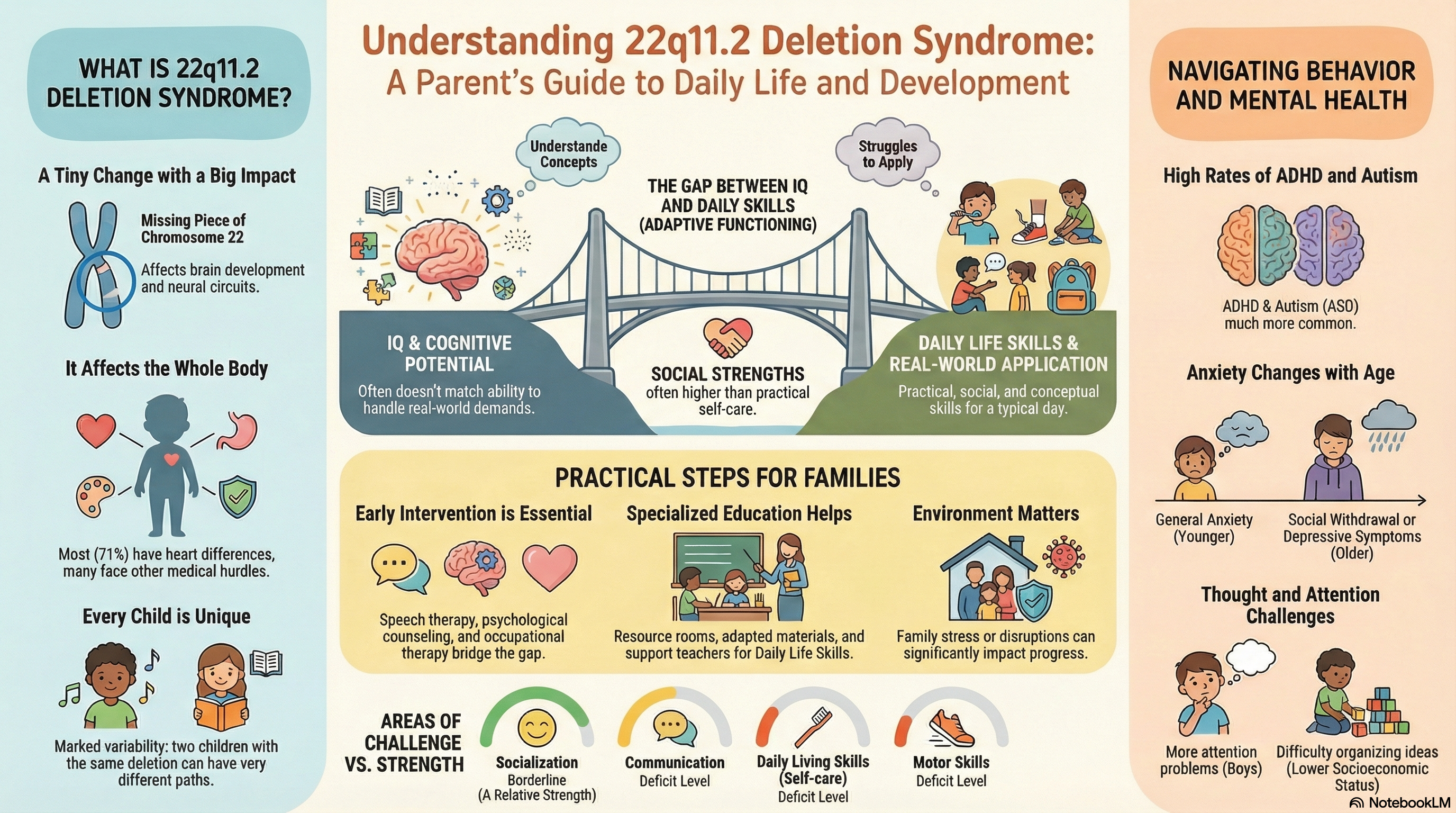
There’s a genetic condition called 22q11.2 deletion syndrome — a tiny missing piece of chromosome 22 that about 1 in 4,000 children are born with. It’s the most common microdeletion in humans, and researchers have known for a while that it raises the risk for ADHD, autism, anxiety, and intellectual disability. What this paper digs into is something subtler and, frankly, more frustrating for parents: the gap between how these children score on IQ tests and how they actually function in daily life.
The researchers found that children with 22q11.2DS frequently show deficits in adaptive functioning — the practical stuff like getting dressed, managing routines, navigating social situations — even when their cognitive scores fall in the “normal” range. It’s the kind of finding that makes you nod if you’ve ever had a professional tell you your child is “too smart” for supports.
Why This Matters for Your Family
If your child has a neurodevelopmental diagnosis and you’ve heard some version of “but their IQ is fine,” this research charts familiar waters. The disconnect between what a child can do on a test and what they do do in the kitchen at 7:45am is one of the most common frustrations parents bring to the table — and one of the hardest to get professionals to take seriously.
This study reinforces what many parents already know in their bones: a child’s ability to perform under structured testing conditions says very little about their ability to navigate the unpredictable seas of daily life. The same deletion that affects cognitive development also shapes how the nervous system handles the executive function demands of ordinary routines — the stuff that doesn’t show up on a standardised assessment.
For co-parents, this is useful ammunition. If one household sees different challenges than the other, it’s not because someone is doing it wrong — it’s because adaptive functioning is context-dependent. The child’s underlying neurology is the same; the environmental demands aren’t.
What You Can Do Today
- Ask for adaptive functioning assessments (like the Vineland or ABAS) alongside IQ testing. If your child’s school or clinician only reports cognitive scores, request the full picture.
- Document daily life challenges with specific examples. “They can’t get dressed independently” is more useful in a meeting than “they struggle with executive function.”
- Share this framing with your co-parent: the gap between test scores and daily skills isn’t a parenting failure — it’s a well-documented neurological pattern.
The Original Paper
Pimenta, L.S.E., Mello, C.B., Polanczyk, G.V., Kulikowski, L.D., Melaragno, M.I., & Kim, C.A. (2026). Adaptive and behavioral phenotype in pediatric 22q11.2 deletion syndrome: Characterizing a high-risk neurogenetic copy number variant. Schizophrenia Research.
Safety Note: This research summary is for informational purposes only and does not constitute medical or therapeutic advice. Always consult qualified professionals for your family’s specific situation. If you or your child are in crisis, contact your local emergency services or the 988 Suicide & Crisis Lifeline.
Research Brief
Generated by NotebookLM from the original paper. Not a replacement for the peer-reviewed source.
Read Full Brief →