Parent-child similarity on autism and ADHD traits and children's social functioning and psychological well-being at 3 years.
Wechsler Daniel L, Jones Emily J H, Pasco Greg, Bazelmans Tessel, Begum-Ali Jannath, Johnson Mark H, Charman Tony
What This Paper Found
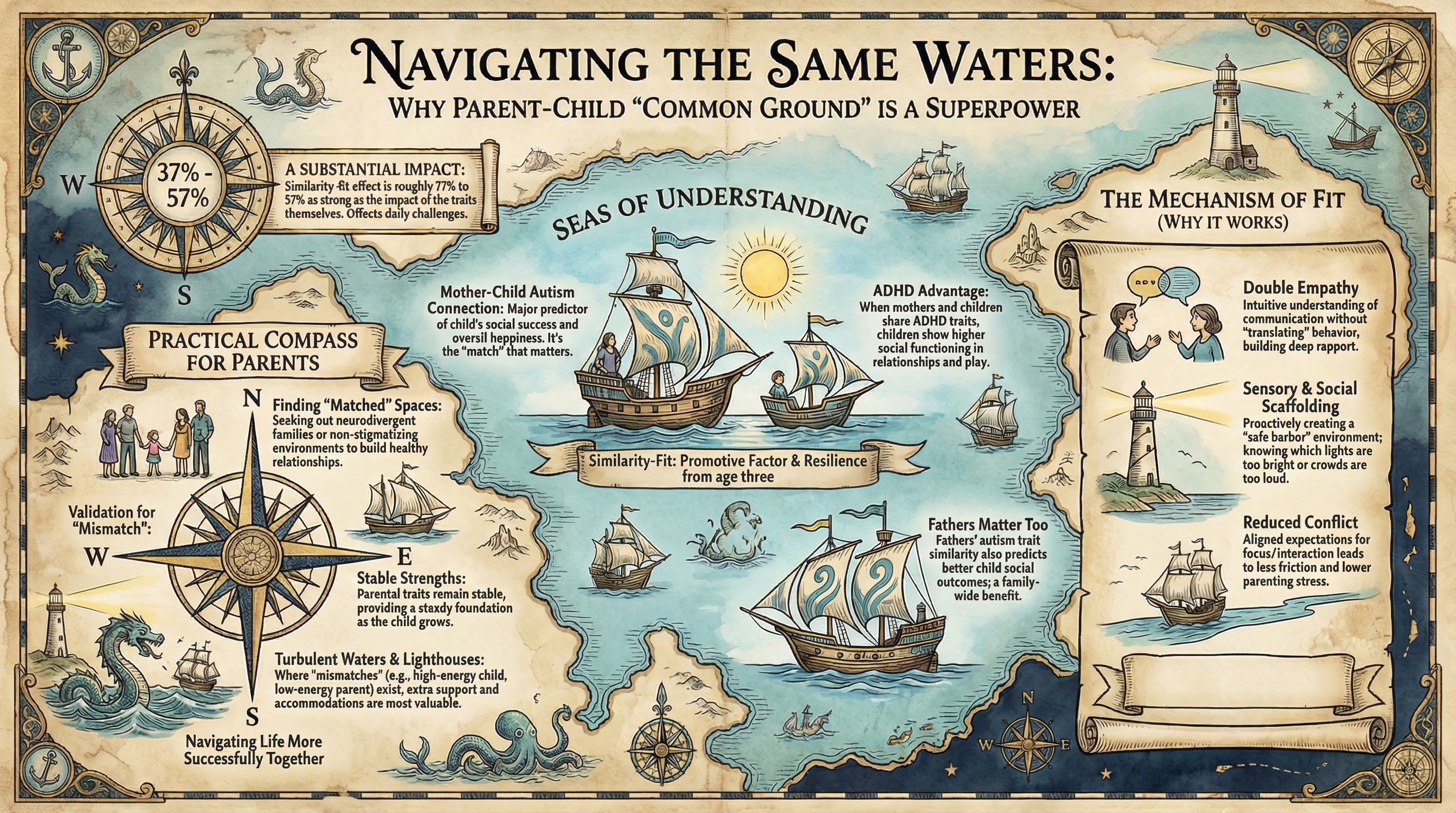
Research on neurodevelopment often focuses on “fixing” symptoms, but this study by Wechsler and colleagues takes a different tack. They explored the “similarity-fit” hypothesis—the idea that when a parent and child share similar ADHD or autistic traits, it can actually create a more protective and supportive family environment. Instead of viewing these shared traits as a double dose of difficulty, the researchers found that this commonality can be a significant source of resilience.
The study followed a group of families to see how these shared traits influenced a child’s development by age three. They discovered that parent-child similarity in how they process the world was predictive of better social functioning and psychological well-being for the child. It suggests that when the person at the helm of the family ship understands the specific currents of the child’s mind because they navigate them too, the journey becomes much more manageable for everyone on board.
Why This Matters for Your Family
This is a breath of fresh air for those of us who have spent years worrying that our own neurodivergent struggles might make parenting harder. While it is true that two ADHD brains in one house can sometimes feel like a ship without an anchor during a gale, this research suggests there is a deep, inherent value in that shared perspective. When you and your child process sensory input or focus in similar ways, you possess an intuitive map of their internal landscape that an outsider simply cannot replicate.
For co-parents, this is a call to look at your “shared frequencies” as a toolkit rather than a checklist of problems. When one parent “gets it” because they live it, they can act as a translator for the child’s needs, helping the other parent understand the “why” behind a behavior. It reminds us that our primary goal isn’t to change how our children’s minds work, but to ensure the harbor we build at home is one where their natural way of being is understood and expected.
What You Can Do Today
- Identify your “common ground” traits. Spend a few minutes today noticing where you and your child mirror each other—whether it’s a need for deep focus, a specific sensory “ick,” or a unique sense of humor—and reframe these as shared navigation tools rather than “symptoms.”
- Validate their communication style through your own experience. When your child is struggling, try using “me too” language, such as, “I know it’s hard to stop doing something fun; my brain feels that way too,” which helps anchor them in a sense of safety and belonging.
- Share your “user manual” with your co-parent. If you have found a strategy that helps you manage a trait you share with your child, explain the internal logic of it to your co-parent so you can both steer the ship with more consistency and less frustration.
The Original Paper
Wechsler, D. L., Jones, E. J. H., Pasco, G., Bazelmans, T., Begum-Ali, J., Johnson, M. H., & Charman, T. (2024). Parent-child similarity on autism and ADHD traits and children’s social functioning and psychological well-being at 3 years. Journal of Child Psychology and Psychiatry.
Safety Note: This research summary is for informational purposes only and does not constitute medical or therapeutic advice. Always consult qualified professionals for your family’s specific situation. If you or your child are in crisis, contact your local emergency services or one of these helplines: 988 Suicide & Crisis Lifeline (US) | Lifeline Australia: 13 11 14 | Samaritans UK: 116 123 | Need to Talk? NZ: 1737
Research Brief
Generated by NotebookLM from the original paper. Not a replacement for the peer-reviewed source.
Read Full Brief →