Father Involvement in the Lives of Their Children With Intellectual and Developmental Disabilities in the UK.
Langley Emma
What This Paper Found
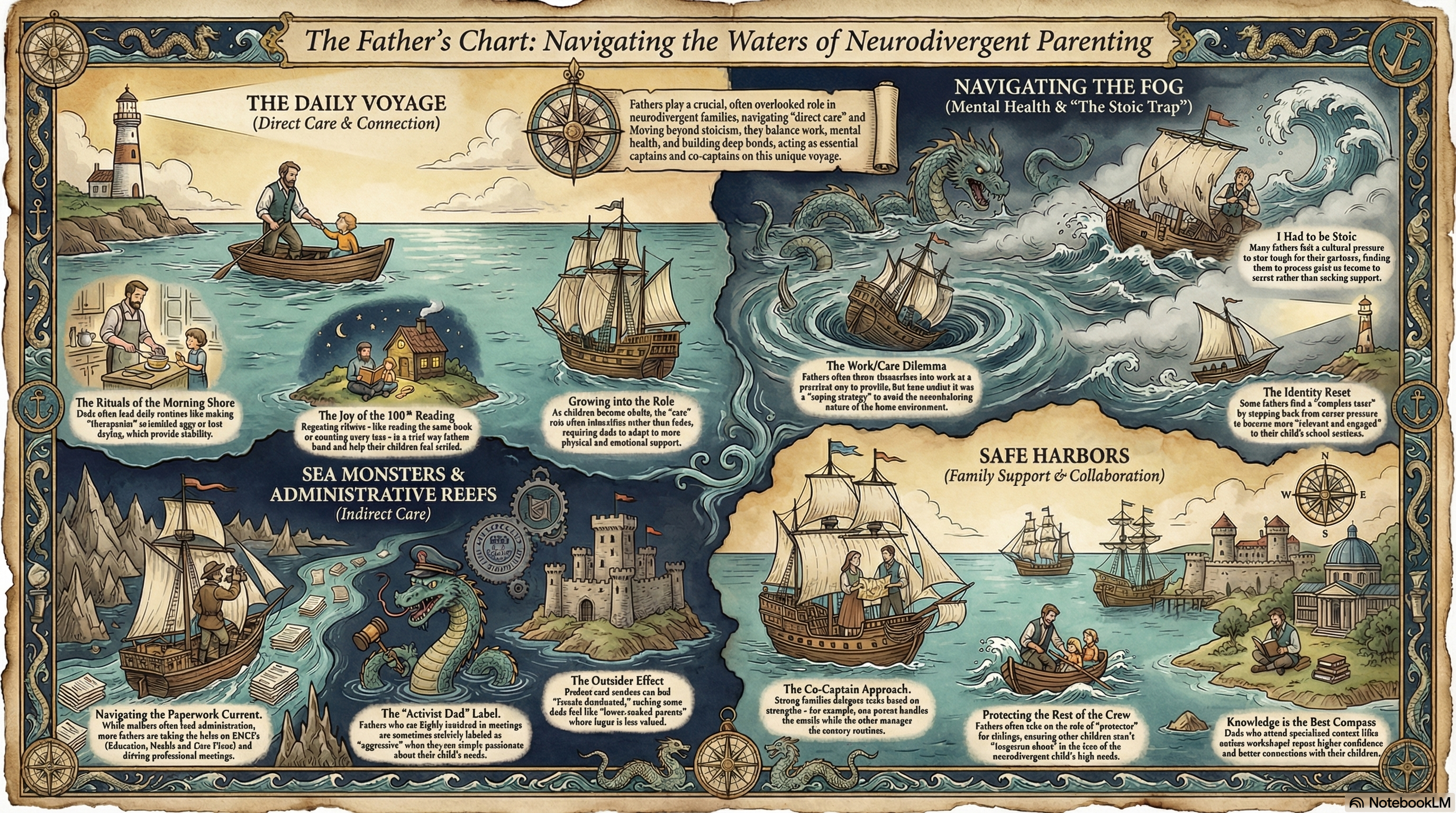
Researchers in the UK looked into how fathers of neurodivergent children and young adults (aged 5 to 24) actually spend their time and energy. They found that while the “primary caregiver” label often lands on mothers, fathers are frequently the unsung second captains of the family ship. These dads aren’t just sitting on the sidelines; they are deeply involved in the daily rhythms of care, providing emotional support and a sense of grounding for the whole household.
However, the study also highlighted that many fathers feel like they are navigating without a proper chart. Traditional support services often focus almost exclusively on mothers, leaving dads feeling like they don’t quite fit into the “parenting support” mold. Between the pressures of work and a lack of father-friendly resources, many men find it difficult to be as present or active as they truly want to be.
Why This Matters for Your Family
When we talk about co-parenting a neurodivergent child, we’re talking about a high-stakes voyage that requires two fully engaged captains. This research reminds us that when one parent is sidelined—whether by work culture or by the way support services are designed—the entire family unit feels the strain. Family stability often depends on how well both parents can share the heavy lifting of direct caregiving and emotional labor.
For your family, this means that supporting “Dad’s involvement” isn’t just a nice-to-have; it’s a structural necessity. When fathers are effectively included in the conversation and given the tools they need, it can lead to better outcomes for everyone on board. It can help prevent burnout for the primary caregiver and creates a more resilient environment for your child to grow.
What You Can Do Today
- Audit your “watch rotations” together. Sit down with your co-parent and look at where the “invisible” work is happening, ensuring both of you have a clear role in direct caregiving tasks that fit your current work schedules.
- Seek out “dad-inclusive” harbors. If you’re looking for support groups or therapy, ask specifically if they have resources or sessions tailored for fathers to help bridge the gap in father-friendly information.
- Normalize the “second captain” role in professional meetings. When speaking with schools or doctors, explicitly include both parents in emails and invites to signal that both captains are equally responsible for charting the child’s course.
The Original Paper
Langley, E. (2020). Father Involvement in the Lives of Their Children With Intellectual and Developmental Disabilities in the UK.
Safety Note: This research summary is for informational purposes only and does not constitute medical or therapeutic advice. Always consult qualified professionals for your family’s specific situation. If you or your child are in crisis, contact your local emergency services or one of these helplines: 988 Suicide & Crisis Lifeline (US) | Lifeline Australia: 13 11 14 | Samaritans UK: 116 123 | Need to Talk? NZ: 1737
Research Brief
Generated by NotebookLM from the original paper. Not a replacement for the peer-reviewed source.
Read Full Brief →