The experience of mothers of autistic children with a pathological demand avoidance profile: an interpretative phenomenological analysis.
Curtis Sam, Izett Elizabeth
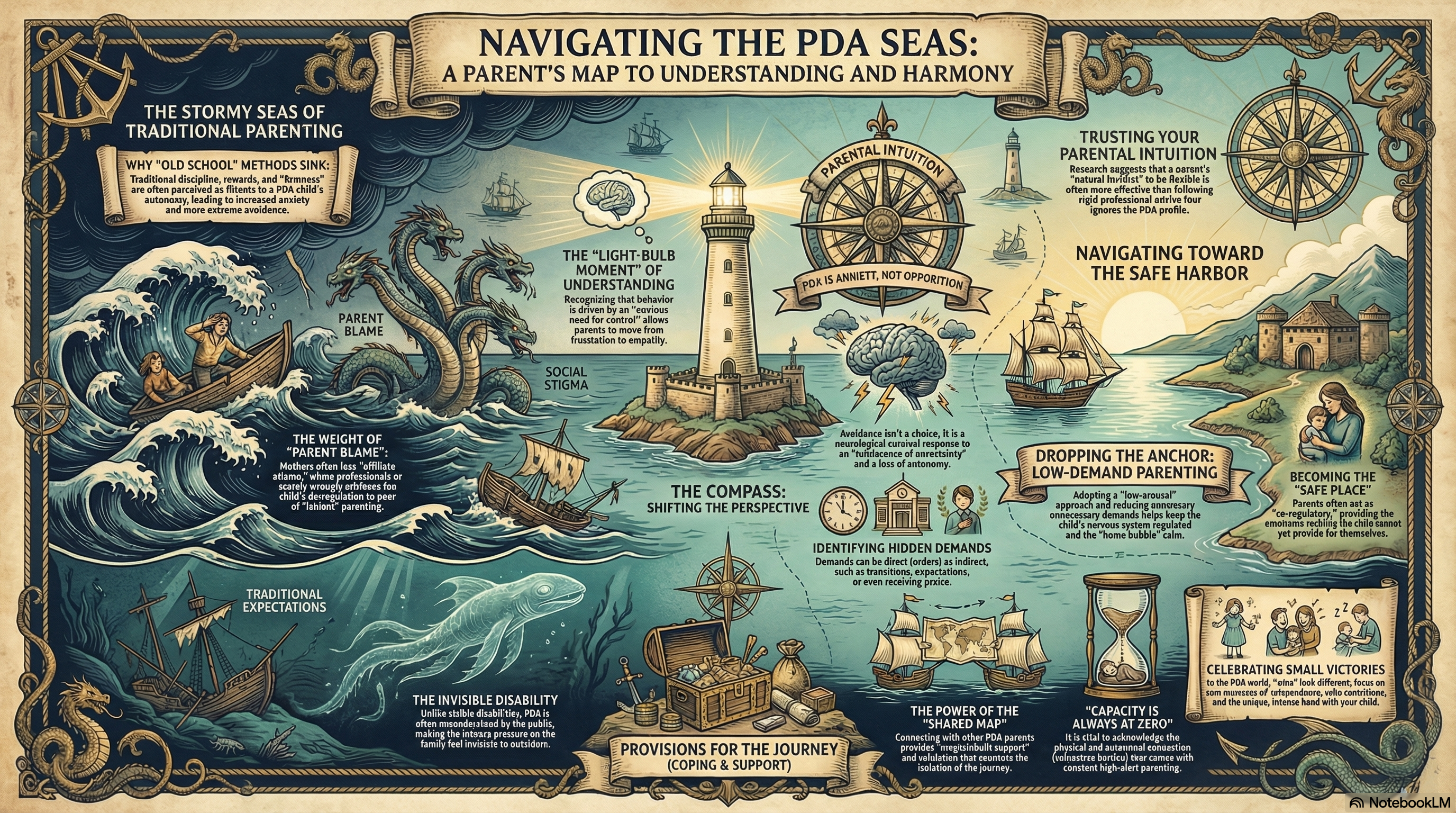
What This Paper Found
Researchers sat down with mothers to understand what life is actually like when your autistic child has a Pathological Demand Avoidance (PDA) profile. They found that these parents aren’t just dealing with typical “behavioral issues”; they are navigating a dense fog where the standard rules of parenting simply don’t apply. The study highlights the intense emotional strain that comes from trying to use traditional methods that often backfire, leading to a cycle of burnout and self-doubt.
One of the most significant findings was how much “changing the charts” helps. When mothers began to understand PDA as a neurological need for autonomy rather than “defiance,” their levels of guilt dropped. The research suggests that recognizing the unique profile of your child isn’t just a clinical exercise—it’s a survival tool that allows parents to stop blaming themselves for a sea they didn’t choose to sail.
Why This Matters for Your Family
This research is a powerful reminder that if you feel like you’re failing, you’re likely just using the wrong equipment for these specific waters. For co-parents, this is especially vital. When two captains are on one ship, but only one recognizes the PDA profile, the resulting friction can be as exhausting as the parenting itself. This study validates that the “flexible” approach you might be using isn’t “giving in”—it’s a necessary adaptation to keep the vessel afloat.
Understanding that traditional discipline can actually be a threat to a PDA child’s sense of safety allows you and your co-parent to stop fighting the child and start supporting their nervous system. It shifts the goal from “compliance” to “collaboration.” By aligning on this perspective, you can act as a combined anchor for your child, providing the stability they need when the world feels overwhelmingly demanding.
What You Can Do Today
- Reframe the “no.” Instead of seeing a refusal as a behavioral choice, try viewing it as a panic response to a loss of autonomy. Pausing to check the emotional weather before placing a demand can help you decide if it’s a safe time to proceed or if you need to wait for the pressure to drop.
- Sync your co-parenting compass. Sit down with your partner and share the understanding that your child’s brain is wired to perceive demands as threats. When you both align on this perspective, you reduce the tension in the house and stop working at cross-purposes.
- Prioritize “Low-Demand” days. On days when the emotional tide is high, consciously choose to reduce the number of direct instructions you give. Use declarative language (e.g., “I wonder if we have any clean socks”) rather than direct commands to help your child feel a sense of agency and safety.
The Original Paper
Curtis, S., & Izett, E. The experience of mothers of autistic children with a pathological demand avoidance profile: an interpretative phenomenological analysis.
Safety Note: This research summary is for informational purposes only and does not constitute medical or therapeutic advice. Always consult qualified professionals for your family’s specific situation. If you or your child are in crisis, contact your local emergency services or the 988 Suicide & Crisis Lifeline.
Research Brief
Generated by NotebookLM from the original paper. Not a replacement for the peer-reviewed source.
Read Full Brief →