"There is Nowhere Else That I'd Rather be Than with Them": Parents' Positive Experiences Parenting Autistic Children.
Heyworth Melanie, McMahon Catherine, Tan Diana Weiting, Pellicano Elizabeth
What This Paper Found
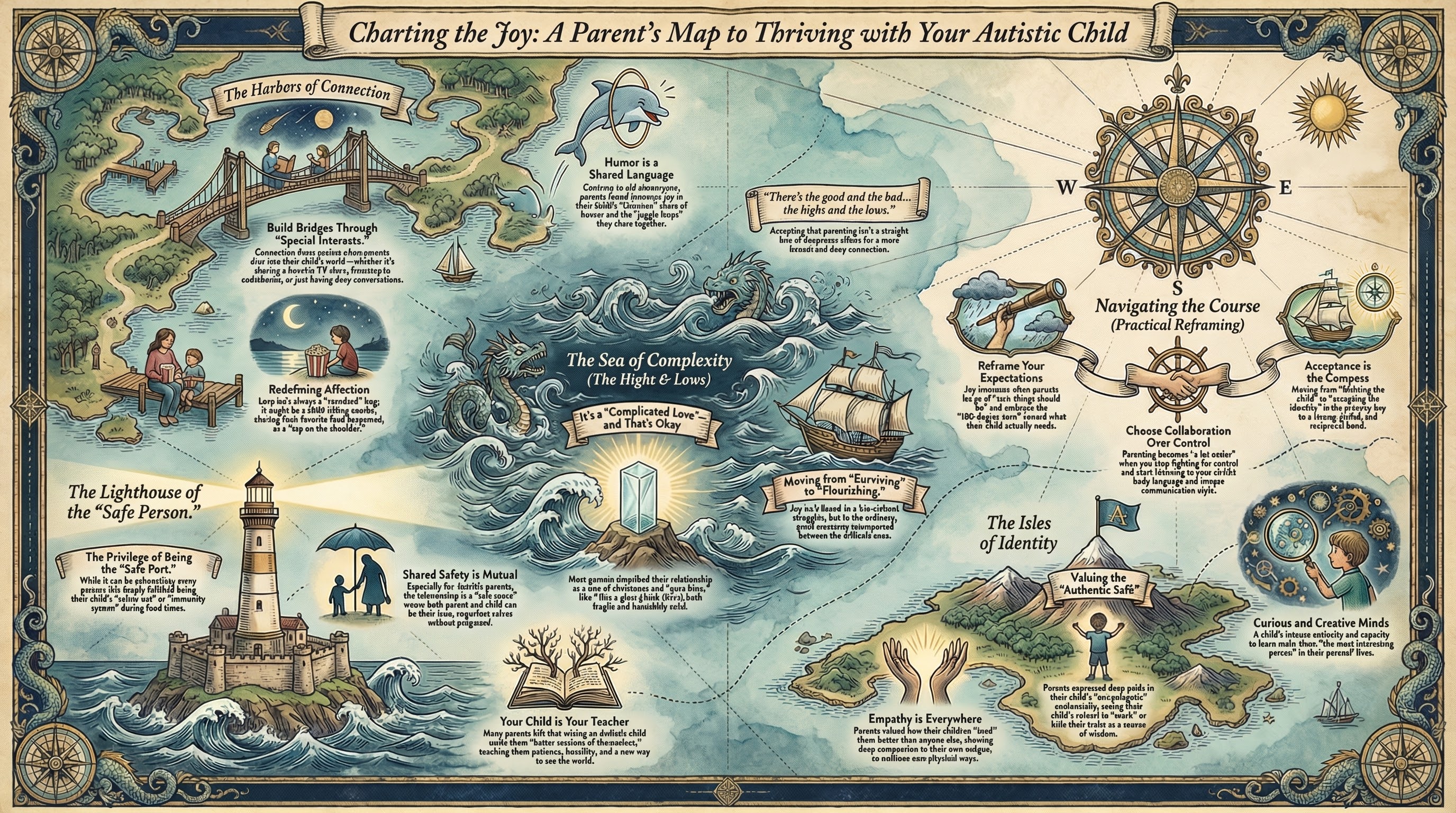
For too long, the maps we’ve been given for neurodivergent parenting have been focused almost entirely on the storms. Researchers have spent decades documenting “parental stress” and “caregiver burden,” as if our children were nothing more than a series of gale-force winds to be weathered. This study takes a different approach, looking specifically at the joy, fulfillment, and deep connection parents feel with their autistic children, regardless of whether the parents themselves are neurodivergent.
The researchers found that the most rewarding parts of parenting didn’t come from “fixing” a child or reaching traditional milestones. Instead, the deepest satisfaction came from simply enjoying the child’s unique personality. When parents stopped trying to force their child into a pre-made mould and instead valued their child’s specific way of seeing the world, they found a sense of success and personal growth that they wouldn’t trade for anything.
Why This Matters for Your Family
When you’re co-parenting in two different households or even just trying to get through a Tuesday afternoon, it’s easy to get stuck in “logistics mode.” We spend so much time discussing therapy schedules and school supports that we can lose sight of the actual human being at the centre of it all. This research reminds us that our children aren’t projects to be completed; they are the crew we’ve chosen to sail with.
For co-parents, this perspective can be a game-changer for your relationship with each other. When both “captains” agree to focus on acceptance rather than a “deficit-based” approach, the tension in the home often drops. It shifts the goal from “how do we make them act more normal?” to “how do we help them feel safe and valued?” This shared focus on the child’s strengths creates a much more stable harbour for everyone involved.
What You Can Do Today
- Schedule five minutes of “unstructured delight.” Put down the phone, ignore the chores, and just watch your child engage with their interests. Try to see their world through their eyes without any expectation of a specific outcome or “teachable moment.”
- Identify one “imagined” milestone to let go of. We all carry internal maps of what we thought parenting would look like. Pick one expectation—maybe it’s about social groups or a specific hobby—that doesn’t actually fit your child, and consciously decide to stop steering toward it.
- Start your next co-parenting check-in with a “win.” Before diving into the logistics of the week, share one small thing your child did that made you smile or feel proud. It grounds your collaboration in the joy of who your child is, rather than the stress of the tasks you need to manage.
The Original Paper
Heyworth, M., McMahon, C., Tan, D. W., & Pellicano, E. (2024). “There is Nowhere Else That I’d Rather be Than with Them”: Parents’ Positive Experiences Parenting Autistic Children.
Safety Note: This research summary is for informational purposes only and does not constitute medical or therapeutic advice. Always consult qualified professionals for your family’s specific situation. If you or your child are in crisis, contact your local emergency services or one of these helplines: 988 Suicide & Crisis Lifeline (US) | Lifeline Australia: 13 11 14 | Samaritans UK: 116 123 | Need to Talk? NZ: 1737
Research Brief
Generated by NotebookLM from the original paper. Not a replacement for the peer-reviewed source.
Read Full Brief →