Comparative analysis of stress levels and coping strategies in parents of neurodivergent and neurotypical children.
Méndez-Lara Lessa A, Ramirez-Rodriguez Rodrigo, Santos Edgar, Puig-Lagunes Angel
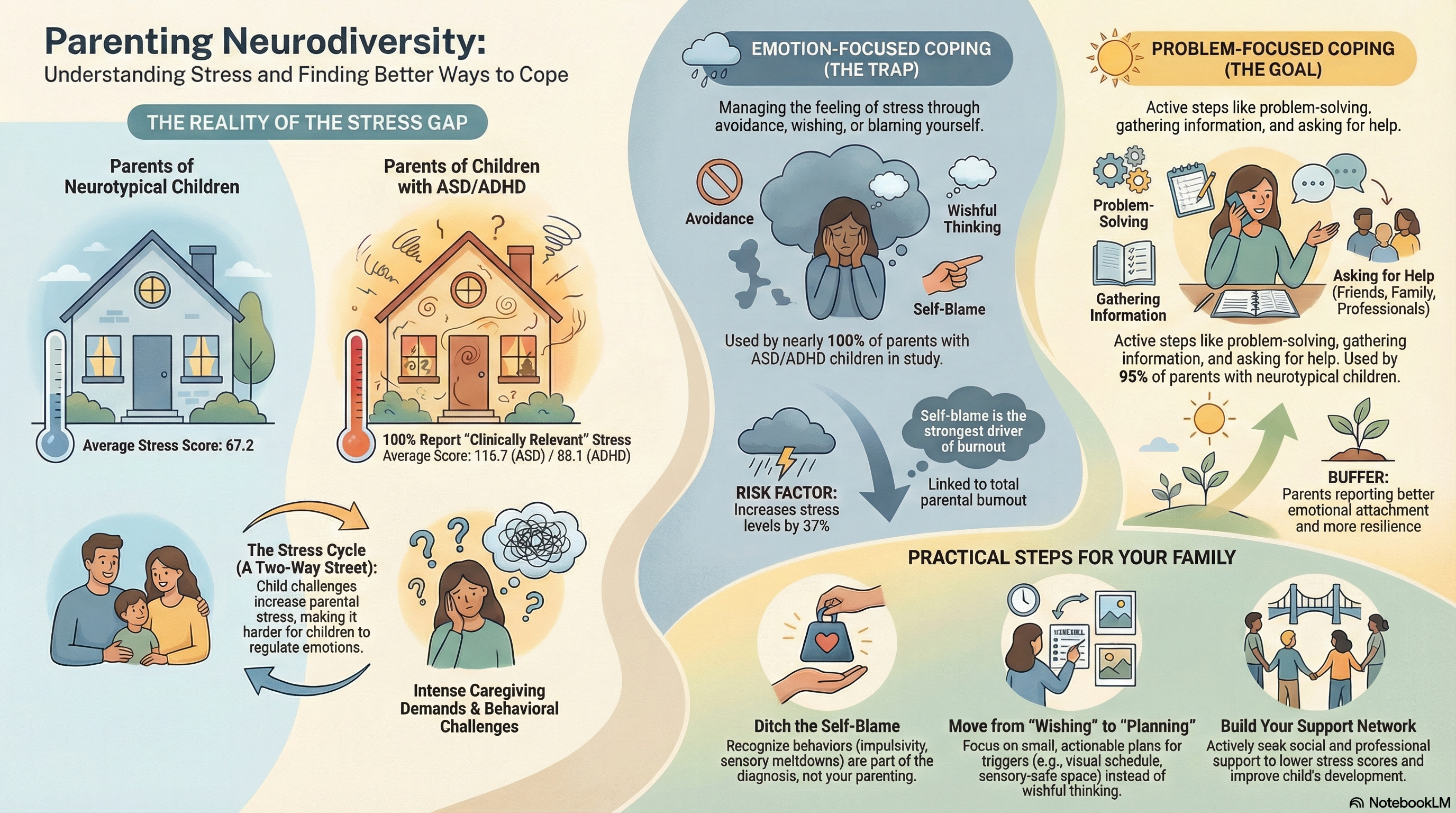
What This Paper Found
A recent study confirmed what many of us feel in our bones every day: the “standard” parenting map doesn’t quite match the waters we are navigating. Researchers looked at over 200 parents and found that those raising autistic children or children with ADHD face significantly higher stress levels than those raising neurotypical children. It isn’t just a slight difference; it is a fundamental shift in the intensity of the voyage.
The study also highlighted how we tend to cope with these challenges. While we might start out trying to solve every logistical problem, many of us naturally move toward “emotion-focused” coping. This means we often spend more energy managing our internal reactions and finding ways to stay regulated when the waves get high, rather than just ticking off a “to-do” list of behavioral fixes.
Why This Matters for Your Family
This research matters because it validates your exhaustion. If you feel like you are working twice as hard just to stay upright, it is often because the environmental conditions are objectively more demanding. Understanding that your stress is a physiological response to a complex situation—not a personal failing—can be the first step in dropping the heavy anchor of guilt.
For co-parents, these findings are a reminder that you are both navigating a high-pressure environment. When stress is this high, communication can easily fray. Recognizing that you are both facing a steeper climb allows you to approach each other with more grace. Instead of focusing solely on “fixing” your child’s behavior, it might be time to look at how you can support each other’s emotional regulation so you can both keep a steady hand on the helm.
What You Can Do Today
- Validate your current capacity. Acknowledge that the stress you feel is a documented reality of neurodivergent parenting, not a sign that you are doing it wrong. Simply naming the “heavy seas” can sometimes make them feel slightly more manageable.
- Shift focus to your own regulation. Since the research shows that emotional coping is a primary tool for us, try to find five minutes today for something that grounds you. Your ability to stay calm is often the most important lighthouse for your child during a meltdown.
- Have a “low-stakes” check-in with your co-parent. Instead of discussing schedules or therapy appointments, ask each other, “How is your stress level on a scale of 1 to 10?” Identifying when one captain is nearing burnout helps you adjust your course together before a crisis hits.
The Original Paper
Méndez-Lara, L. A., Ramirez-Rodriguez, R., Santos, E., & Puig-Lagunes, A. Comparative analysis of stress levels and coping strategies in parents of neurodivergent and neurotypical children.
Safety Note: This research summary is for informational purposes only and does not constitute medical or therapeutic advice. Always consult qualified professionals for your family’s specific situation. If you or your child are in crisis, contact your local emergency services or the 988 Suicide & Crisis Lifeline.
Research Brief
Generated by NotebookLM from the original paper. Not a replacement for the peer-reviewed source.
Read Full Brief →