Stress Assessment in Parents of Children With Autism Spectrum Disorder: A Prospective Case-Control Study.
Negi Kritika, Saini Vasu, Kumar Shruti, Sharma Utkarsh, Jacob Nidhi Elizabeth
What This Paper Found
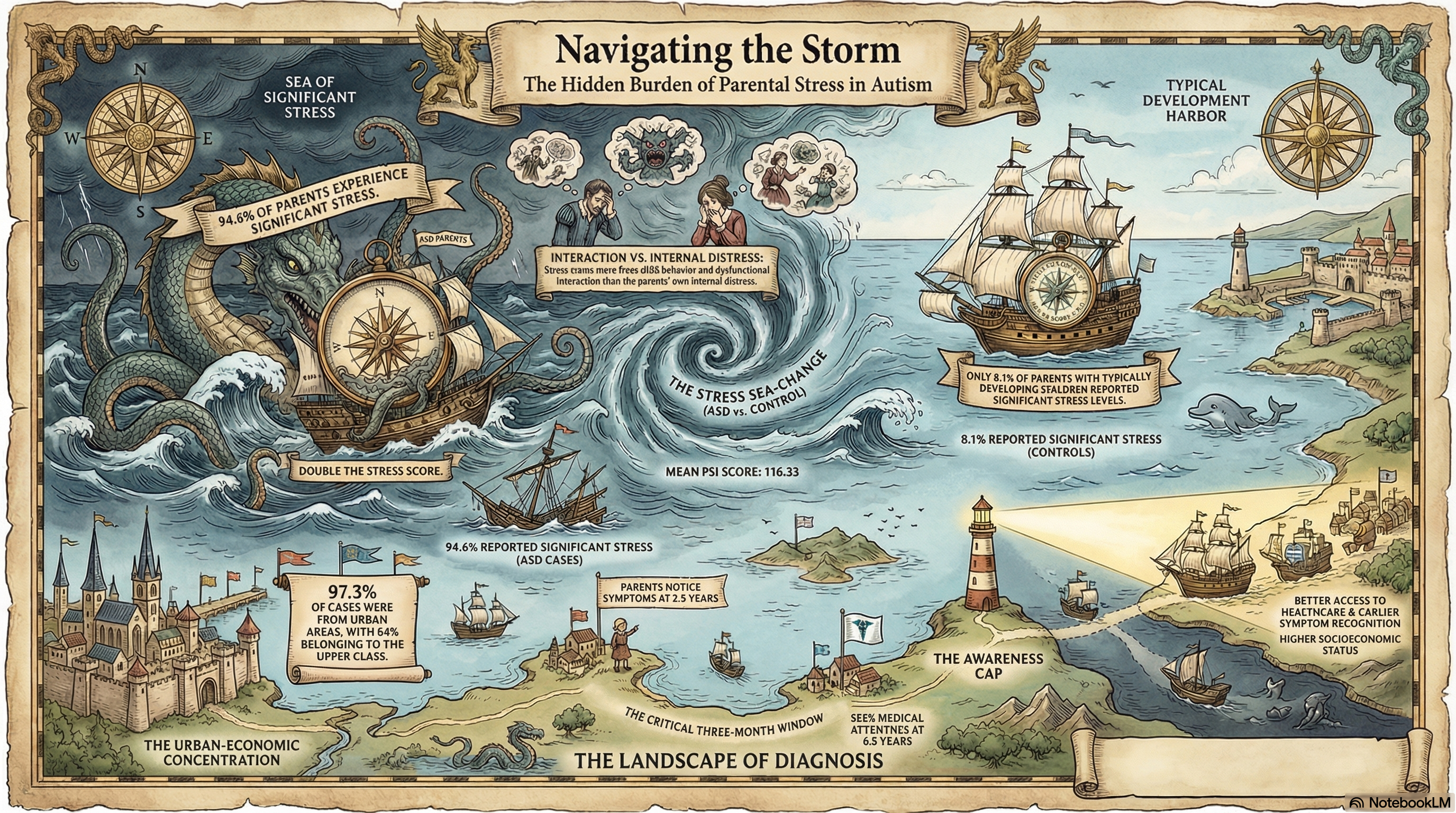
A recent study looked at families just after their child received an autism diagnosis. The results confirmed what many of us feel but rarely see written down: over 94% of parents are dealing with significant stress. This isn’t just “tiredness”—it’s a heavy weight that comes with navigating a new and often confusing map of support and needs.
The research also found that families in busy city environments and those raising children who are considered “higher-functioning” often face the highest levels of pressure. It suggests that when a child’s needs aren’t immediately visible to the outside world, the burden on the parents to bridge that gap can be even more exhausting. It’s like sailing a ship that looks fine from the shore while you’re below deck frantically plugging leaks.
Why This Matters for Your Family
If you’ve been feeling like you’re barely keeping your head above water, this paper is your permission slip to stop blaming yourself. The stress you feel isn’t a sign of personal failure; it’s a measurable, statistical reality of the journey you’re on. Seeing that nearly every parent in the study felt the same way reminds us that we aren’t alone in these waters.
For co-parents, this is a vital signal to check in with each other. When 94% of us are stressed, it means the team is almost certainly under fire. Acknowledging that the environment itself is high-pressure can help shift the focus from blaming each other to finding ways to support the whole family unit. Supporting your own mental health isn’t a luxury; it’s essential maintenance for the voyage ahead.
What You Can Do Today
- Name the weather. Simply acknowledging to yourself or your co-parent that “this is objectively high-stress work” can lower the internal pressure to be perfect.
- Schedule a ten-minute ‘anchor’ moment. Find one small, predictable ritual—a cup of tea, a short walk, or a shared joke—that has nothing to do with schedules, symptoms, or “to-do” lists.
- Look for local harbors. Reach out to one support group or a friend who truly “gets it” to reduce the isolation that often makes metropolitan parenting feel so lonely.
The Original Paper
Negi, K., Saini, V., Kumar, S., Sharma, U., & Jacob, N. E. (2023). Stress Assessment in Parents of Children With Autism Spectrum Disorder: A Prospective Case-Control Study. Cureus.
Safety Note: This research summary is for informational purposes only and does not constitute medical or therapeutic advice. Always consult qualified professionals for your family’s specific situation. If you or your child are in crisis, contact your local emergency services or one of these helplines: 988 Suicide & Crisis Lifeline (US) | Lifeline Australia: 13 11 14 | Samaritans UK: 116 123 | Need to Talk? NZ: 1737
Research Brief
Generated by NotebookLM from the original paper. Not a replacement for the peer-reviewed source.
Read Full Brief →