All in the Family? A Systematic Review and Meta-analysis of Parenting and Family Environment as Risk Factors for Attention-Deficit/Hyperactivity Disorder (ADHD) in Children.
Claussen Angelika H, Holbrook Joseph R, Hutchins Helena J, Robinson Lara R, Bloomfield Jeanette, Meng Lu, Bitsko Rebecca H, O'Masta Brenna, Cerles Audrey, Maher Brion, Rush Margaret, Kaminski Jennifer W
What This Paper Found
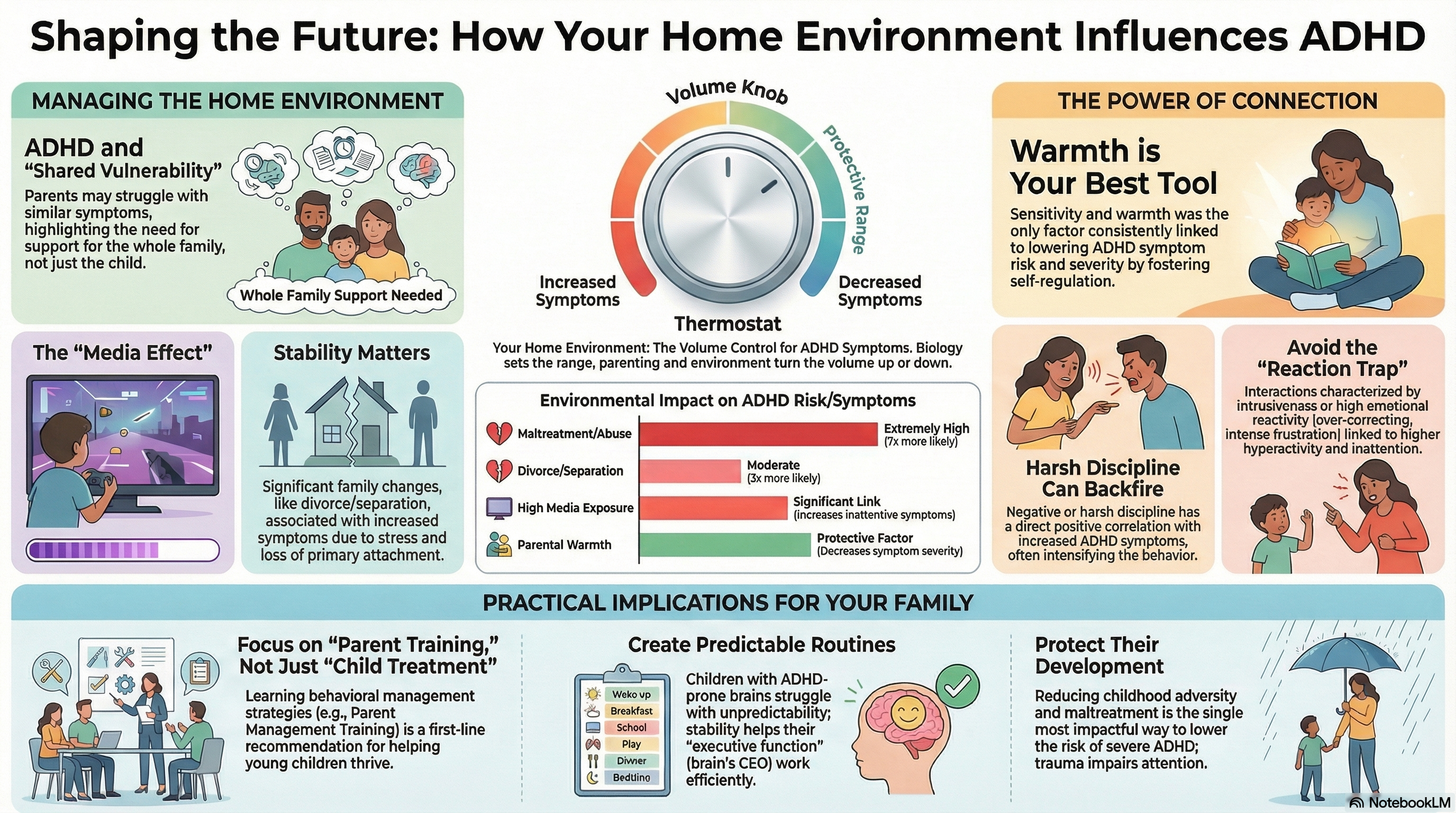
Researchers analyzed nearly 60 studies to understand how the home environment interacts with ADHD. They discovered that while the diagnosis itself often has deep roots, the “weather” in the family home significantly influences how symptoms show up. Warmth and sensitivity from parents seem to act as a protective barrier, potentially lowering the severity of a child’s ADHD-related challenges with focus and regulation.
Conversely, high-stress environments and harsh discipline were linked to an increase in ADHD symptoms and a higher likelihood of a child receiving a clinical diagnosis. It can be helpful to think of your parenting style as the “current” of the water. A gentle, supportive current helps a neurodivergent child find their way more easily than a turbulent one.
Why This Matters for Your Family
This research is a powerful reminder that supporting the “captains” of the home is just as important as supporting the child. When we are stressed, burnt out, or constantly in “correction mode,” the family environment can become quite choppy. This isn’t about parent-blame; it’s about acknowledging that our own regulation and warmth are among the most effective tools in our kit for helping a child with ADHD thrive.
For co-parents, this highlights the need for a unified approach to the family climate. If one home is a safe harbor of warmth while the other is characterized by high reactivity, the child can struggle to find their emotional footing. Working together to lower the collective stress level isn’t just “nice”—it is a proactive way to improve your child’s long-term focus and developmental health.
What You Can Do Today
- Lead with warmth. Make a conscious effort to increase positive, sensitive interactions, especially when things feel difficult. These moments of connection serve as a protective buffer that can help lower the severity of your child’s ADHD symptoms over time.
- Reduce the “harshness.” When behaviors are challenging, try to pause before reacting with frustration or strict discipline. High-reactivity environments can unintentionally increase ADHD symptoms, so focusing on staying calm helps keep the ship steady for everyone.
- Update your charts. Seeking out parent training or behavioral management support isn’t a sign that you are failing. It is a proactive way to gain the specific tools needed to navigate neurodivergent life with more confidence and less family stress.
The Original Paper
Claussen, A. H., et al. (2021). All in the Family? A Systematic Review and Meta-analysis of Parenting and Family Environment as Risk Factors for Attention-Deficit/Hyperactivity Disorder (ADHD) in Children.
Safety Note: This research summary is for informational purposes only and does not constitute medical or therapeutic advice. Always consult qualified professionals for your family’s specific situation. If you or your child are in crisis, contact your local emergency services or the 988 Suicide & Crisis Lifeline.
Research Brief
Generated by NotebookLM from the original paper. Not a replacement for the peer-reviewed source.
Read Full Brief →