Autism and ADHD: A Literature Review Regarding Their Impacts on Parental Divorce.
Anchesi Smeralda Diandra, Corallo Francesco, Di Cara Marcella, Quartarone Angelo, Catalioto Rino, Cucinotta Francesca, Cardile Davide
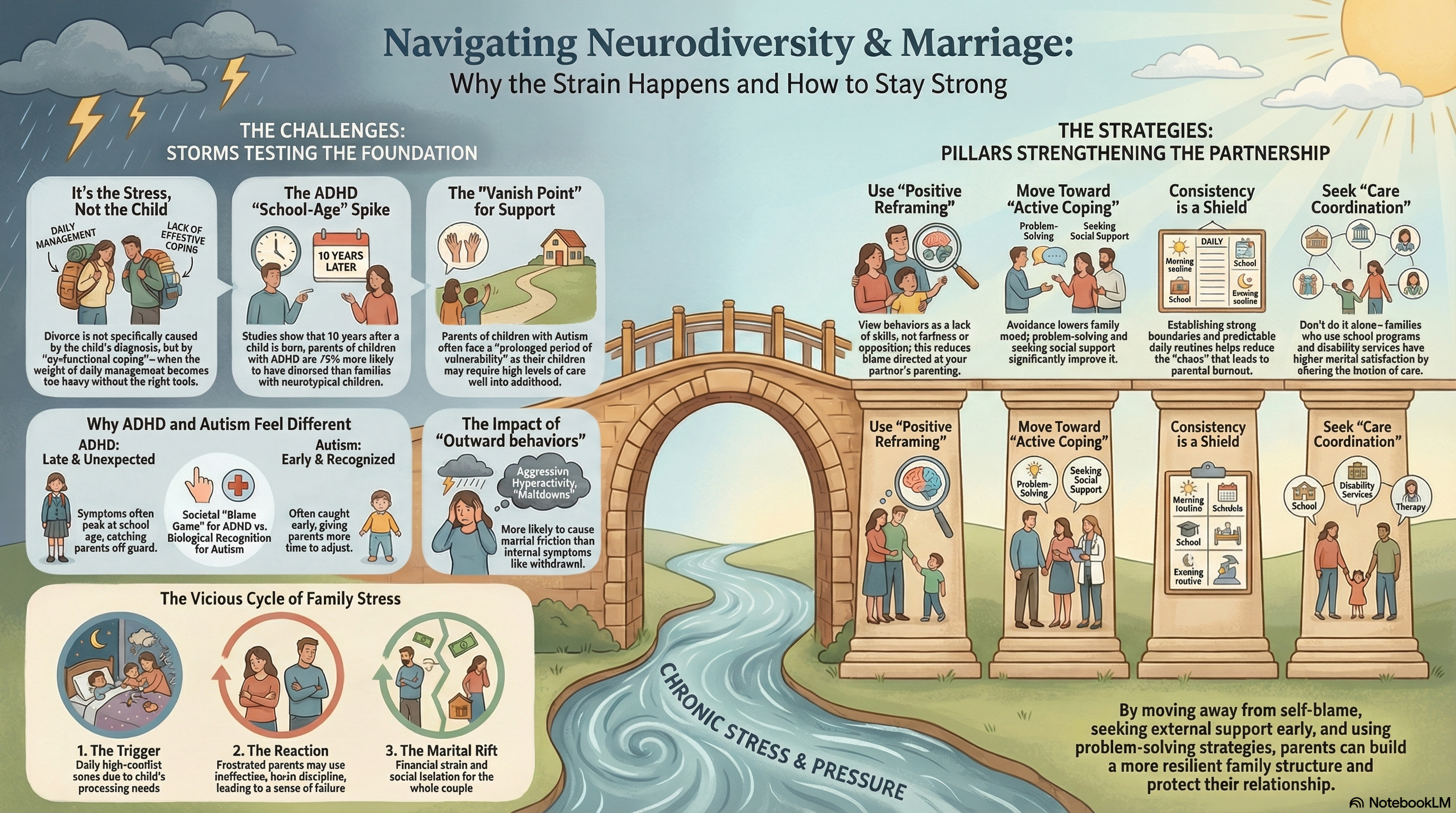
What This Paper Found
Research often looks at the “broken” parts of families, but this review shifts the focus. It examined how having a child with ADHD or autism affects whether parents stay together, and the big takeaway is that a diagnosis is not a destiny or a guarantee of a split. Instead, the stability of the home depends more on the tools the parents have in their kit and the external support they can lean on while navigating these waters.
The researchers noted a specific challenge for families with ADHD: they often receive less early support than families with an autism diagnosis. This lack of a clear “map” early on can put extra strain on the co-parenting relationship. It reminds us that the struggle is rarely about the child’s brain; it’s about the weight the parents are asked to carry without enough hands on deck.
Why This Matters for Your Family
If you’ve ever felt like your relationship is taking on water because of the endless appointments, school calls, and sensory meltdowns, this research validates that feeling. It suggests that the pressure we feel isn’t caused by our children, but by the lack of structural support surrounding us. When we stop viewing the diagnosis as the problem and start looking at our co-parenting tools, we can find ways to steady the ship.
Creating a warm, cohesive home life acts as a protective shield for your child. When parents work as a team, it helps children feel secure enough to develop their own social skills and emotional regulation. Even when the weather is rough, having two captains who trust each other’s signals makes all the difference for everyone on board.
What You Can Do Today
- Audit your current crew. Take five minutes to identify one recurring task where you’re currently rowing alone—like managing school emails or bedtime routines—and ask for one specific way a partner or friend can share that load.
- Schedule a “non-logistics” check-in. Set a timer for ten minutes tonight to talk to your co-parent about anything except the children’s needs or the family schedule, helping you reconnect as partners rather than just shift managers.
- Focus on the harbor atmosphere. Identify one daily routine that has become a battleground and consciously lower the demands for one evening, prioritizing a warm connection over getting every task done perfectly.
The Original Paper
Diandra, A. S., Corallo, F., Di Cara, M., Quartarone, A., Catalioto, R., Cucinotta, F., & Cardile, D. Autism and ADHD: A Literature Review Regarding Their Impacts on Parental Divorce.
Safety Note: This research summary is for informational purposes only and does not constitute medical or therapeutic advice. Always consult qualified professionals for your family’s specific situation. If you or your child are in crisis, contact your local emergency services or the 988 Suicide & Crisis Lifeline.
Research Brief
Generated by NotebookLM from the original paper. Not a replacement for the peer-reviewed source.
Read Full Brief →