Enhanced cortisol response to stress in children in autism.
Spratt Eve G, Nicholas Joyce S, Brady Kathleen T, Carpenter Laura A, Hatcher Charles R, Meekins Kirk A, Furlanetto Richard W, Charles Jane M
What This Paper Found
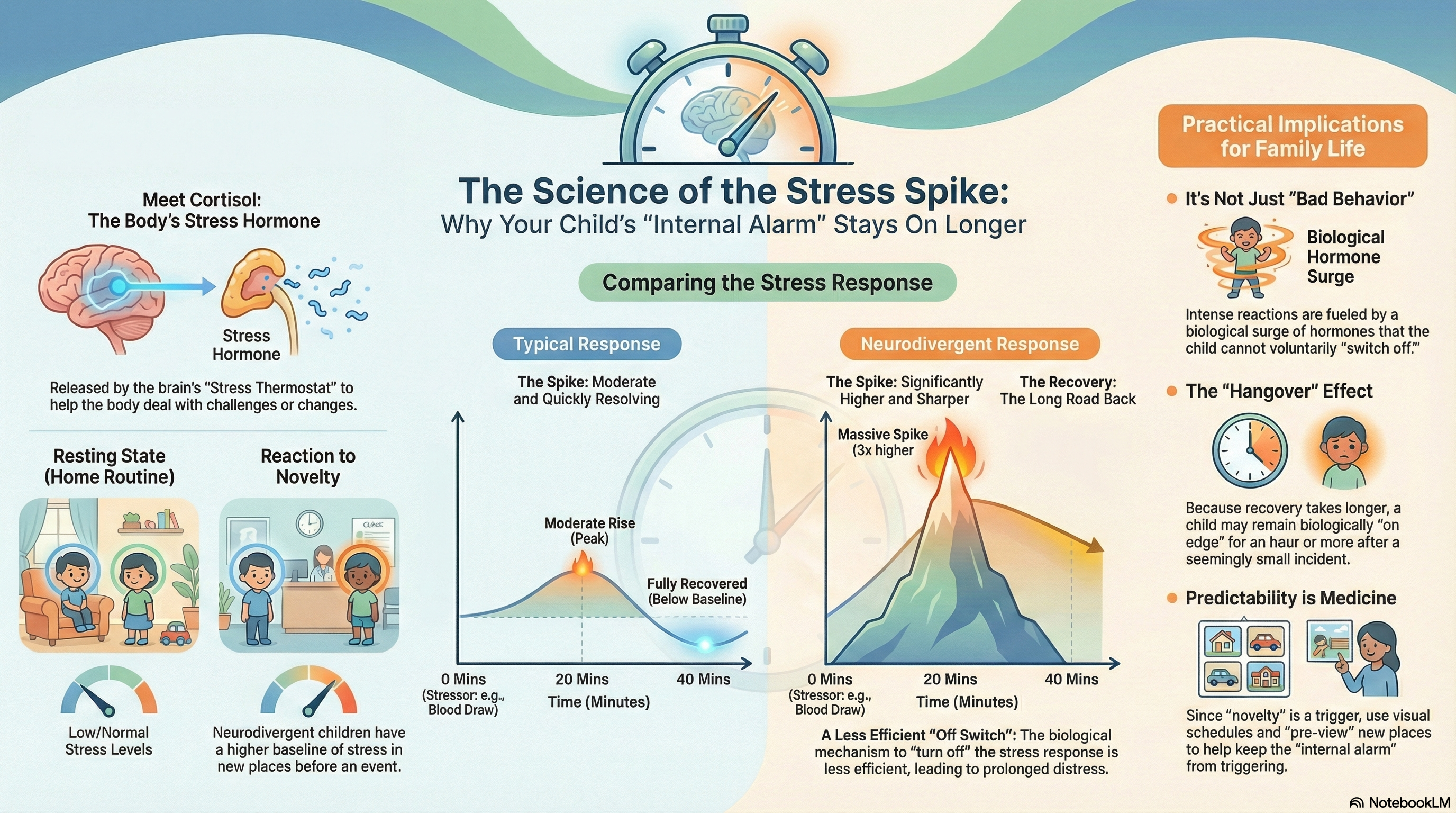
When we talk about stress, we often focus on the behavior we see on the outside. This study looked at what’s happening under the surface by measuring cortisol, the body’s primary stress hormone. Researchers compared how autistic children and their neurotypical peers reacted to new environments and stressful events, such as a routine blood draw.
The results showed that for autistic children, the body’s internal alarm system doesn’t just ring louder—it rings for much longer. Their cortisol levels spiked significantly higher and took much more time to return to a baseline “resting” state. It’s as if their internal barometer is tuned to a more sensitive frequency, making even small changes feel like a major shift in the weather.
Why This Matters for Your Family
If you’ve ever felt like your child was “overreacting” to a simple change in plans, this research offers some biological grace. It isn’t a choice or a behavioral power struggle; it’s a physiological overdrive. When your child’s body is flooded with cortisol, they aren’t just being difficult. They are physically caught in a high-stress state that their body cannot quickly shut off.
For co-parents, this is a vital piece of the map. Knowing that your child takes longer to physically recover from a stressor means that transitions between houses require extra “harbor time.” If both captains understand that the child’s body may still be processing the last “wave” of stress, you can work together to keep the environment low-demand until they are truly regulated and ready for the next leg of the voyage.
What You Can Do Today
- Build in “buffer time” after transitions. Since the body takes longer to clear stress hormones, avoid jumping straight into high-demand tasks like homework or chores immediately after school or a house swap.
- Front-load predictability. Use visual schedules or simple “pre-paving” conversations to reduce the novelty of new environments, which can help keep that initial cortisol spike from reaching its peak.
- Prioritize physical calm over “learning moments.” When a child is in a high-cortisol state, their logical brain is effectively offline; focus on sensory safety and a quiet presence until the biological storm has passed.
The Original Paper
Spratt, E. G., Nicholas, J. S., Brady, K. T., Carpenter, L. A., Hatcher, C. R., Meekins, K. A., Furlanetto, R. W., & Charles, J. M. Enhanced cortisol response to stress in children in autism.
Safety Note: This research summary is for informational purposes only and does not constitute medical or therapeutic advice. Always consult qualified professionals for your family’s specific situation. If you or your child are in crisis, contact your local emergency services or one of these helplines: 988 Suicide & Crisis Lifeline (US) | Lifeline Australia: 13 11 14 | Samaritans UK: 116 123 | Need to Talk? NZ: 1737
Research Brief
Generated by NotebookLM from the original paper. Not a replacement for the peer-reviewed source.
Read Full Brief →