The relative risk and timing of divorce in families of children with an autism spectrum disorder.
Hartley Sigan L, Barker Erin T, Seltzer Marsha Mailick, Floyd Frank, Greenberg Jan, Orsmond Gael, Bolt Daniel
What This Paper Found
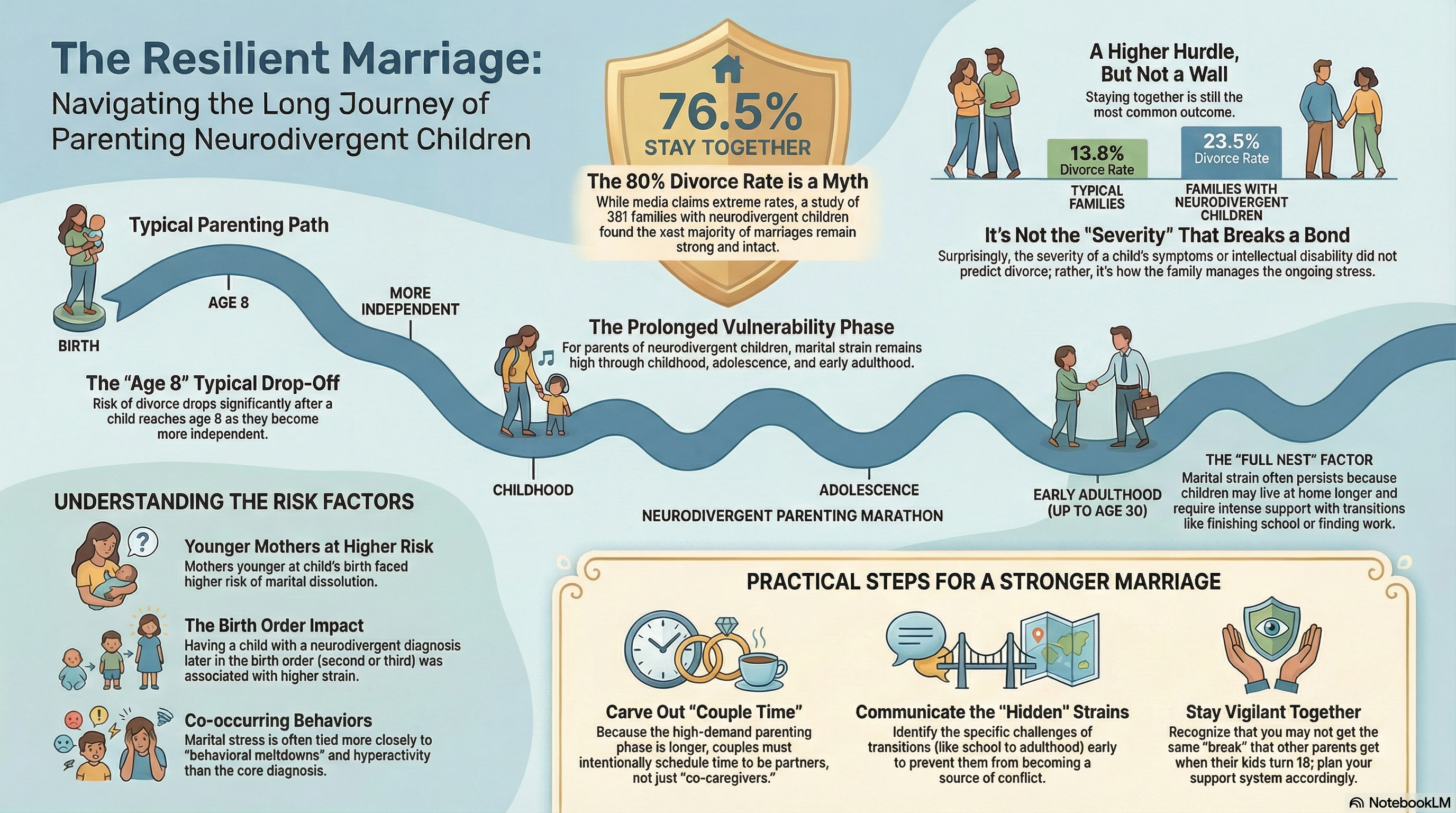
For years, a scary statistic has floated around parent groups: the idea that 80% of marriages with an autistic child end in divorce. This research helps us finally toss that myth overboard. The study followed hundreds of families and found the actual rate is closer to 23%. While that is higher than the average for families with neurotypical children (about 14%), it is a far cry from the “inevitable breakdown” we’ve often been told to expect.
The most striking finding, however, isn’t just the percentage—it’s the timing. In most families, the risk of divorce tends to drop significantly once the youngest child hits age eight. But for those of us navigating neurodivergence, the pressure remains steady. The study found that the risk stays elevated throughout the child’s adolescence and even into early adulthood. Our voyage doesn’t necessarily hit calmer waters just because the “toddler years” are over.
Why This Matters for Your Family
Knowing these numbers matters because it validates the exhaustion many of us feel. If you find yourself still struggling to coordinate with your co-captain when your child is twelve or twenty, it’s not a sign that your relationship is uniquely broken. It’s a reflection of the reality that the logistical and emotional demands of raising an autistic child don’t “level off” the way society expects them to. The external environment remains high-pressure, which means the internal bond between co-parents needs ongoing maintenance.
This research also highlights that certain factors, like having a child later in the birth order, can add extra weight to the ship. It reminds us that co-parenting in this space isn’t a sprint to age eight; it’s a long-haul journey. When we stop waiting for a “magical age” where things get easier, we can start building the sustainable habits we need to stay afloat for the duration of the passage.
What You Can Do Today
- Separate the stress from the partner. Remind yourself that the tension you feel is often a side effect of the environment—the “stormy seas”—rather than a flaw in your co-parent. Validating that the situation is objectively hard can often lower the temperature during a disagreement.
- Schedule a “non-logistics” check-in. Because the pressure is sustained, it’s easy for every conversation to become about therapy schedules or school meetings. Aim for ten minutes today where you don’t talk about the kids or the house, allowing you to reconnect as two people sharing the same deck.
- Audit your support crew. Since the study shows the pressure continues into your child’s adulthood, look for support systems that aren’t just focused on “early intervention.” Finding a community of parents with older children can help you prepare for the long-term rhythm of this life.
The Original Paper
Hartley, S. L., et al. (2010). The relative risk and timing of divorce in families of children with an autism spectrum disorder. Journal of Family Psychology, 24(4), 443–451.
Safety Note: This research summary is for informational purposes only and does not constitute medical or therapeutic advice. Always consult qualified professionals for your family’s specific situation. If you or your child are in crisis, contact your local emergency services or one of these helplines: 988 Suicide & Crisis Lifeline (US) | Lifeline Australia: 13 11 14 | Samaritans UK: 116 123 | Need to Talk? NZ: 1737
Research Brief
Generated by NotebookLM from the original paper. Not a replacement for the peer-reviewed source.
Read Full Brief →