Maternal cortisol levels and behavior problems in adolescents and adults with ASD.
Seltzer Marsha Mailick, Greenberg Jan S, Hong Jinkuk, Smith Leann E, Almeida David M, Coe Christopher, Stawski Robert S
What This Paper Found
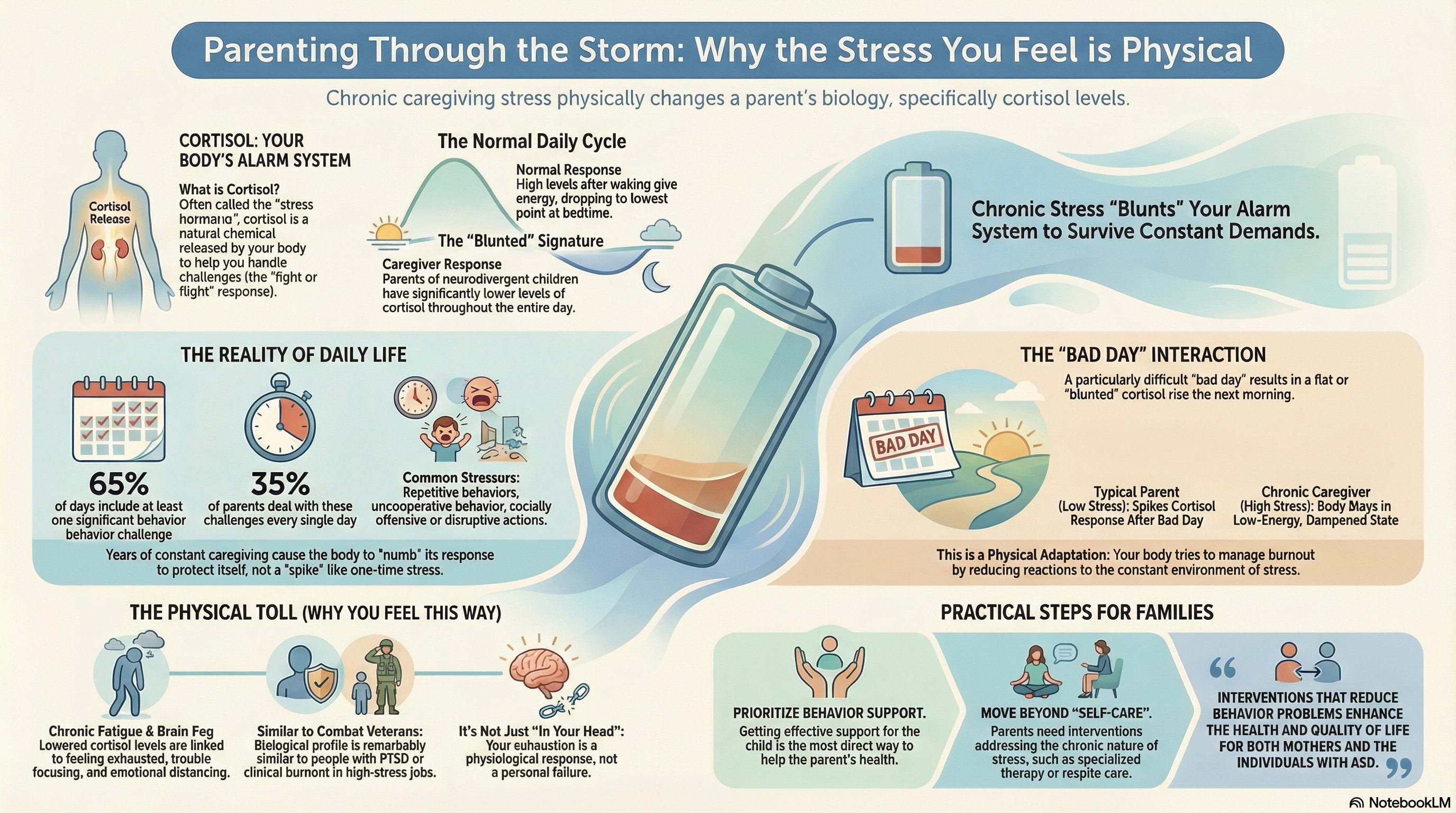
Researchers looked at mothers of autistic adolescents and adults, comparing their stress hormones to mothers of children without these challenges. They found that these mothers had significantly lower cortisol levels throughout the day. While we often think of cortisol as a “bad” stress hormone, we actually need it to wake up and meet the day’s demands. For these parents, years of navigating high-pressure waters seem to have blunted that natural rhythm.
The study also showed that a history of behavior challenges changes how your body reacts to the present. If you’ve spent years weathering intense storms, your system adapts to the constant vigilance. It’s not that you’ve stopped caring or working; it’s that your body’s internal engine has shifted into a different, lower gear to survive the long-term strain.
Why This Matters for Your Family
This research validates the deep, bone-weary exhaustion many of us feel but struggle to explain. It isn’t just “parenting fatigue” or a lack of willpower; it is a documented physiological change in how your body manages stress. When you are the primary navigator for an autistic child through adolescence and into adulthood, the chronic demands can lead to a state of biological burnout where your body struggles to regulate its own energy.
For co-parents, understanding this is a game-changer for your partnership. If one or both of you are operating with these blunted stress rhythms, you aren’t being lazy or disengaged—you are physically depleted from the voyage. Recognizing this as a biological reality allows you to move away from resentment and toward a shared strategy for keeping the ship afloat without expecting each other to run on empty.
What You Can Do Today
- Validate your fatigue as a physical fact. Instead of telling yourself you should have more energy, recognize that your body has physically adapted to chronic stress and give yourself permission to operate at a different pace.
- Schedule “low-tide” handoffs with your co-parent. When the biological burnout hits, communicate clearly that you are at capacity so you can trade off duties and allow each other small windows of true recovery time.
- Lower the sensory demands on yourself. Since your stress-response system is already working overtime, look for small ways to reduce the noise and input in your environment today, even if it is just five minutes of quiet in a darkened room.
The Original Paper
Seltzer, M. M., Greenberg, J. S., Hong, J., Smith, L. E., Almeida, D. M., Coe, C., & Stawski, R. S. (2010). Maternal cortisol levels and behavior problems in adolescents and adults with ASD. Journal of Autism and Developmental Disorders, 40(4), 457–469.
Safety Note: This research summary is for informational purposes only and does not constitute medical or therapeutic advice. Always consult qualified professionals for your family’s specific situation. If you or your child are in crisis, contact your local emergency services or one of these helplines: 988 Suicide & Crisis Lifeline (US) | Lifeline Australia: 13 11 14 | Samaritans UK: 116 123 | Need to Talk? NZ: 1737
Research Brief
Generated by NotebookLM from the original paper. Not a replacement for the peer-reviewed source.
Read Full Brief →