The Emerging Neurobiology of Attention Deficit Hyperactivity Disorder: The Key Role of the Prefrontal Association Cortex.
Arnsten Amy F T
What This Paper Found
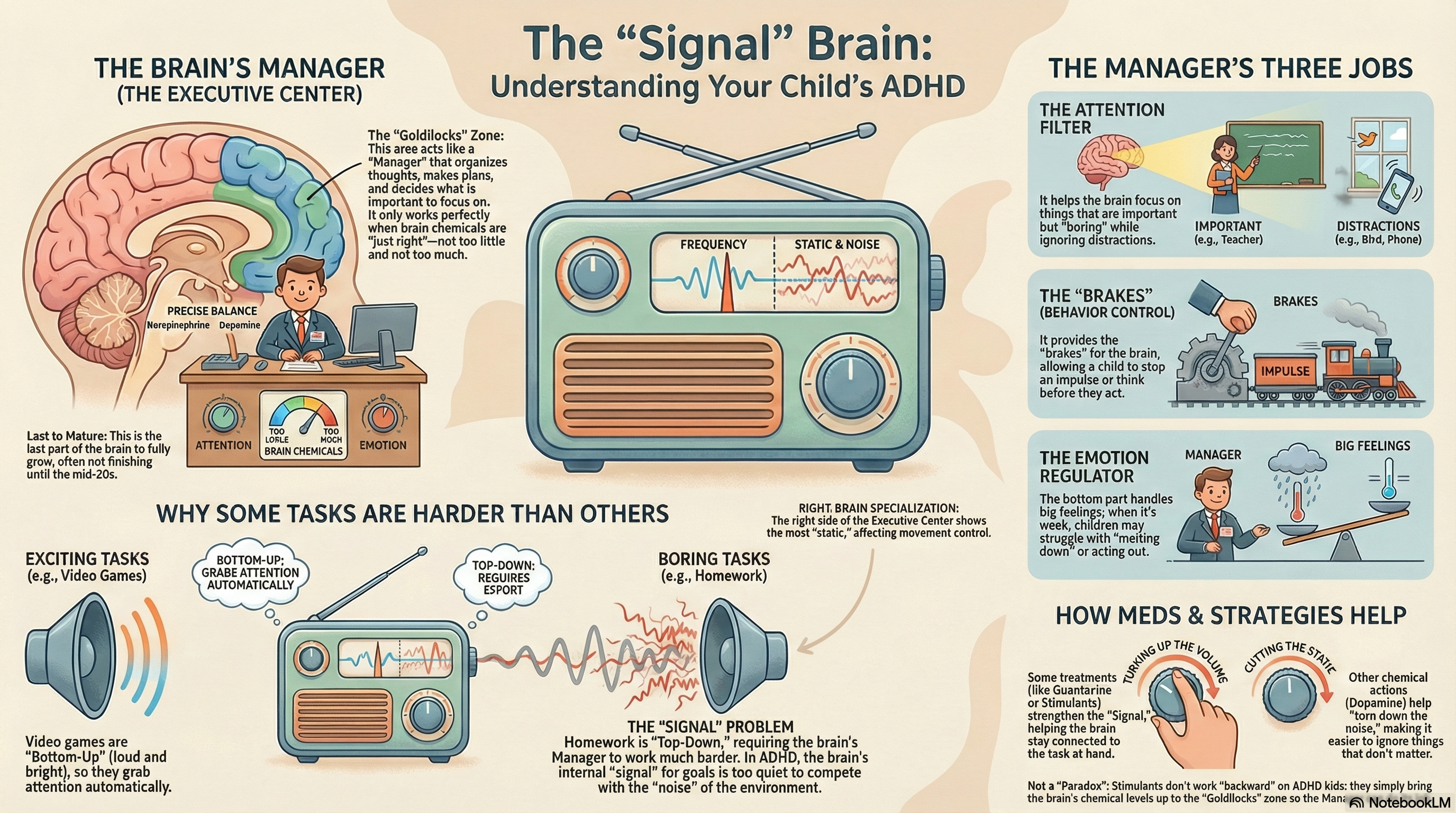
Research by Dr. Amy Arnsten suggests that ADHD is rooted in the physical architecture of the brain rather than a lack of willpower. Think of the prefrontal cortex as the Captain on the bridge of your child’s ship. This area is responsible for steering through distractions, managing big emotions, and deciding when to drop anchor on an impulse. In ADHD, this “command center” often has weaker signals or matures a bit more slowly than expected.
The paper explains that for this part of the brain to work effectively, it needs a very specific neurochemical environment—specifically involving dopamine and norepinephrine. Without the right balance of these “fuel” sources, the Captain’s orders don’t always reach the rest of the crew. Medication works by essentially tuning the radio frequency, making those internal signals clearer so the brain can better regulate focus and movement.
Why This Matters for Your Family
If you’ve ever felt the weight of judgment from others, this research is a powerful reminder that your child isn’t “choosing” to be difficult. Their internal compass is navigating through a biological fog that makes it physically harder to filter out the noise of the world. Understanding this can help shift our perspective from frustration to a place of supportive curiosity.
For co-parents, this science provides a neutral map for your shared voyage. When both captains understand that ADHD is a matter of brain maturation and chemistry, it takes the heat out of disagreements about parenting styles. It moves the conversation away from blaming one another and toward a unified strategy that supports the child’s unique biology. It’s not about “fixing” a behavior, but about providing the right external support while their internal systems develop.
What You Can Do Today
- Externalize the “command center.” Use tools like visual checklists and timers to act as a secondary navigator for your child’s brain while their own systems are still maturing.
- Adjust your expectations when the waters get choppy. When a meltdown occurs, remind yourself and your co-parent that this is a biological signal failure, not a lack of respect; this helps you stay calm and supportive.
- Sync your environments. Work together to ensure both homes provide the predictable structure an ADHD brain needs, minimizing distractions during high-focus times like homework or morning routines.
The Original Paper
Arnsten, A. F. T. (2009). The Emerging Neurobiology of Attention Deficit Hyperactivity Disorder: The Key Role of the Prefrontal Association Cortex.
Safety Note: This research summary is for informational purposes only and does not constitute medical or therapeutic advice. Always consult qualified professionals for your family’s specific situation. If you or your child are in crisis, contact your local emergency services or one of these helplines: 988 Suicide & Crisis Lifeline (US) | Lifeline Australia: 13 11 14 | Samaritans UK: 116 123 | Need to Talk? NZ: 1737
Research Brief
Generated by NotebookLM from the original paper. Not a replacement for the peer-reviewed source.
Read Full Brief →