Desperate for Sleep: Exploring Parental Perceptions of Melatonin Use Among Adolescents With Neurodevelopmental Disorders.
Hanish Alyson E, Freudenburg Shelby M, Klein Abbey J, Stappert Danielle J, Shade Marcia Y
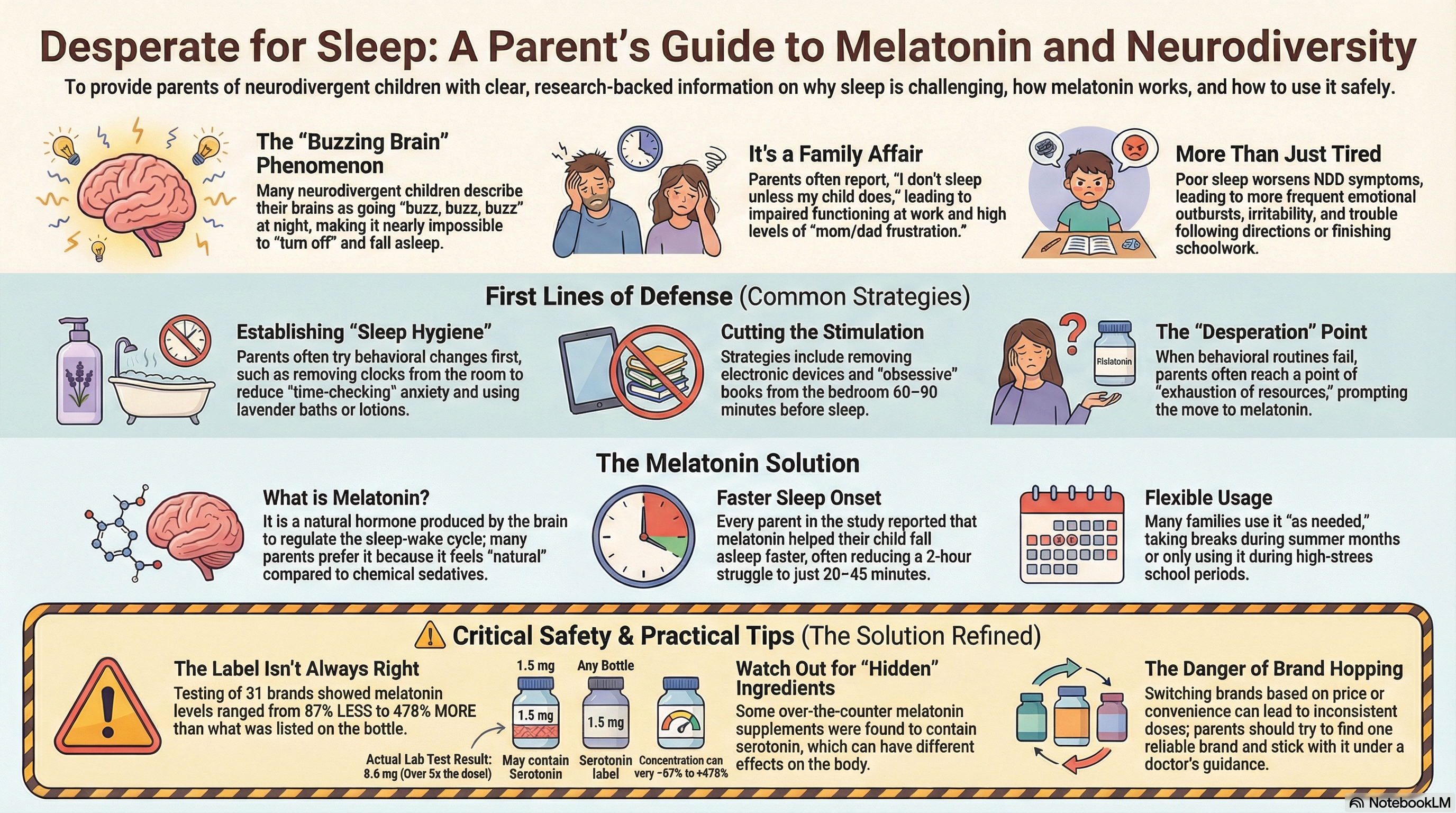
What This Paper Found
The researchers looked at what many of us know intimately: the exhaustion of parenting a neurodivergent teen who simply cannot drift off. When sleep is elusive for an autistic or ADHD adolescent, it doesn’t just mean a late night; it often leads to more intense daytime challenges like increased hyperactivity, repetitive behaviors, and difficulty focusing at school.
The study found that using melatonin helped these teens fall asleep faster and stay asleep longer. By addressing the “sleep onset latency”—the agonizingly long stretch between head hitting the pillow and actual rest—families saw a noticeable shift in how their kids functioned during the daylight hours. It suggests that consistent rest is the ballast that keeps the ship from tipping over during the day.
Why This Matters for Your Family
This research highlights that sleep deprivation is a shared family experience. When your teen is awake and restless, the entire co-parenting team is effectively “on watch.” The study noted that when sleep improved for the child, levels of parental stress and burnout dropped significantly. It’s hard to be a patient, regulated co-captain when you’ve been running on broken rest for weeks on end.
Improving sleep provides a much-needed calm harbor for the whole household. It allows co-parents to step out of “crisis mode” and actually find a moment to breathe. When the child’s internal rhythm is better supported, the daily voyage feels less like a battle against a gale and more like a manageable passage.
What You Can Do Today
- Stick to one trusted brand. Because over-the-counter melatonin isn’t always strictly regulated, the actual strength can vary wildly between different bottles; find a brand that seems to work for your child and stay with it to ensure the dosage remains steady.
- Log the “sleep-to-behavior” connection. Keep a simple notebook by your bed for a week to see if better sleep onset truly correlates with fewer meltdowns the next day, which gives you clear data to share with your child’s specialist.
- Coordinate the evening “watch.” Use the potential for a smoother bedtime to define clear roles with your co-parent, ensuring that if one person handles the wind-down routine, the other is guaranteed a period of “off-duty” time to recover their own energy.
The Original Paper
Hanish, A. E., Freudenburg, S. M., Klein, A. J., Stappert, D. J., & Shade, M. Y. (2023). Desperate for sleep: Exploring parental perceptions of melatonin use among adolescents with neurodevelopmental disorders. Journal of Pediatric Health Care.
Safety Note: This research summary is for informational purposes only and does not constitute medical or therapeutic advice. Always consult qualified professionals for your family’s specific situation. If you or your child are in crisis, contact your local emergency services or the 988 Suicide & Crisis Lifeline.
Research Brief
Generated by NotebookLM from the original paper. Not a replacement for the peer-reviewed source.
Read Full Brief →