Effectiveness of a Parent Empowerment Program for Parents of Children with Autism: A Randomized Controlled Trial.
Şahin Büyük Damla, Özmen Dilek
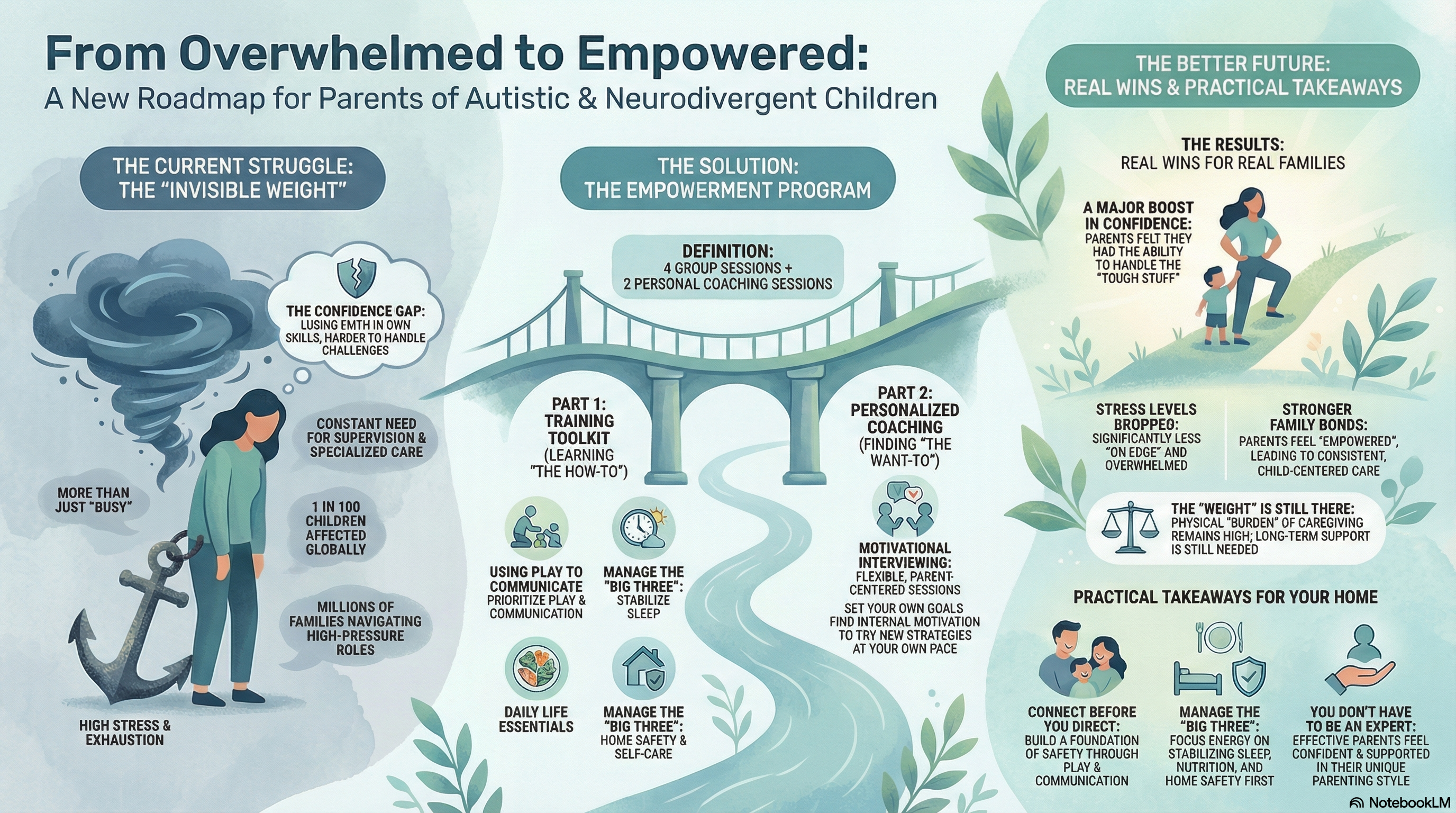
What This Paper Found
Researchers recently looked at what happens when parents of autistic children receive more than just a list of instructions. In this study, they combined structured training with “motivational interviewing”—essentially personal coaching sessions designed to help parents find their own internal drive and solutions. They found that this combination didn’t just teach parents what to do; it fundamentally changed how they felt about doing it.
The most striking find was that while the actual amount of work involved in caregiving didn’t necessarily decrease, the parents’ stress levels did. By increasing their “self-efficacy”—their belief in their own ability to handle difficult situations—parents felt more like capable navigators even when the waters remained choppy. It suggests that our internal state is just as important as the external tools we use.
Why This Matters for Your Family
For those of us co-parenting in neurodivergent households, this research is a vital reminder that we are the captains of the family ship. Often, we get bogged down in the logistics of therapies and school meetings, forgetting that our confidence in our own skills is what keeps things steady. When one parent feels like they are failing, the stress doesn’t just impact them—it ripples through the whole partnership.
This matters because it shows that empowerment isn’t about doing more; it’s about feeling more equipped for what you’re already doing. When co-parents work on their confidence together, they can stop simply reacting to every wave and start feeling more intentional. It shifts the dynamic from just surviving the day to feeling like you actually have the tools to manage it.
What You Can Do Today
- Look for “and” support. When seeking help, try to find resources that offer both factual education and personal coaching, as the combination is often more effective than just learning the theory on your own.
- Identify your “small wins.” Pick one specific part of your daily routine that feels stressful and focus on building your confidence in just that area, remembering that small, successful navigations lead to greater overall self-efficacy.
- Check your shared compass. Set aside a few minutes with your co-parent to discuss what is working well, focusing on your strengths as a team rather than just the challenges you are facing.
The Original Paper
Şahin Büyük, D., & Özmen, D. Effectiveness of a Parent Empowerment Program for Parents of Children with Autism: A Randomized Controlled Trial.
Safety Note: This research summary is for informational purposes only and does not constitute medical or therapeutic advice. Always consult qualified professionals for your family’s specific situation. If you or your child are in crisis, contact your local emergency services or the 988 Suicide & Crisis Lifeline.
Research Brief
Generated by NotebookLM from the original paper. Not a replacement for the peer-reviewed source.
Read Full Brief →