Learning from the community: iterative co-production of a programme to support the development of attention, regulation and thinking skills in toddlers at elevated likelihood of autism or ADHD.
Hendry Alexandra, Hulks Victoria, Murphy Shona, Radford Holly, Smith Sally, Charman Tony, Mathers Sandra, Rhodes Sinead, Scerif Gaia
What This Paper Found
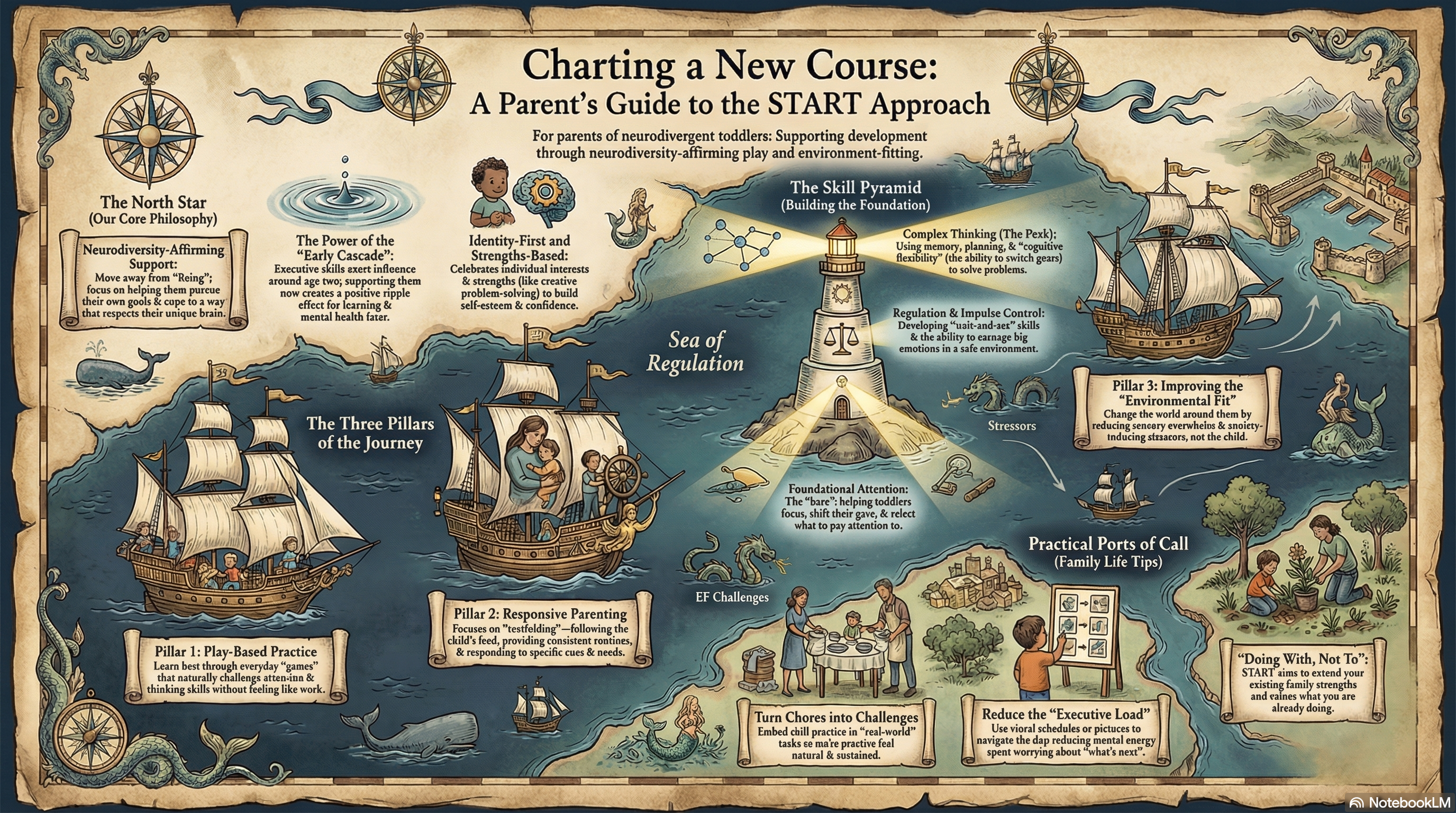
Researchers recently collaborated with parents and specialists to design a new way of supporting toddlers who show early signs of autism or ADHD. Instead of the old-school approach of trying to make neurodivergent kids act “more like everyone else,” this program—called START—focuses on building executive function skills. These are the brain’s “air traffic control” tools that help us manage attention and regulate our emotions. Think of it as helping your child learn to read the specific currents of their own sea, rather than forcing them to sail in someone else’s waters.
The study found that the most effective way to help toddlers wasn’t through rigid therapy, but through three simple shifts: giving kids play-based ways to practice thinking skills, helping parents learn specific ways to support that development, and—perhaps most importantly—changing the environment to fit the child. It is a move away from “fixing” the child and toward steadying the helm of the family ship by adjusting the world around them to reduce stressors.
Why This Matters for Your Family
When you’re parenting a child with a neurodivergent “operating system,” it can often feel like you’re constantly trying to navigate through a thick fog without a map. This research is validating because it suggests that our kids don’t need to be changed; they need to be understood. It shifts the focus from “how do I stop this behavior?” to “how can I adjust the environment so my child can thrive?” This perspective can take a lot of the shame and pressure off both you and your child.
For those of us co-parenting across two homes, this approach can serve as a vital compass. When both parents focus on “environmental fit”—like reducing sensory noise or using visual schedules—it creates a safe harbor of consistency for the child. It moves the conversation away from blame (“you’re too soft” or “you’re too rigid”) and toward a shared goal of identifying the external triggers that cause our kids to lose their footing.
What You Can Do Today
- Observe the “Environmental Fit.” Take a look at the parts of your day where things usually go off course. Instead of focusing only on your child’s reaction, look at the surroundings—is it too loud, too bright, or too rushed? Sometimes a small tweak to the room or the schedule can act like dropping an anchor in a choppy sea.
- Follow their lead in play. Set aside ten minutes to simply join your child in whatever they are doing, without trying to teach or direct them. When we follow their lead, we create a space for them to practice focus and engagement on their own terms, which helps build those essential thinking “muscles.”
- Narrate the “How,” not just the “What.” When you’re doing a task, talk out loud about your own thinking process (e.g., “I’m looking for my keys, so I’m going to check the hook first”). This “think-aloud” strategy helps your toddler see how regulation and planning work in real-time, providing a lighthouse for them to follow as they learn to navigate their own thoughts.
The Original Paper
Hendry, A., Hulks, V., Murphy, S., Radford, H., Smith, S., Charman, T., Mathers, S., Rhodes, S., & Scerif, G. Learning from the community: iterative co-production of a programme to support the development of attention, regulation and thinking skills in toddlers at elevated likelihood of autism or ADHD.
Safety Note: This research summary is for informational purposes only and does not constitute medical or therapeutic advice. Always consult qualified professionals for your family’s specific situation. If you or your child are in crisis, contact your local emergency services or the 988 Suicide & Crisis Lifeline.
Research Brief
Generated by NotebookLM from the original paper. Not a replacement for the peer-reviewed source.
Read Full Brief →