The Autism Constellation and Neurodiversity: Long-Term and Adult Outcomes in Autism Spectrum Disorder.
Eigsti Inge-Marie
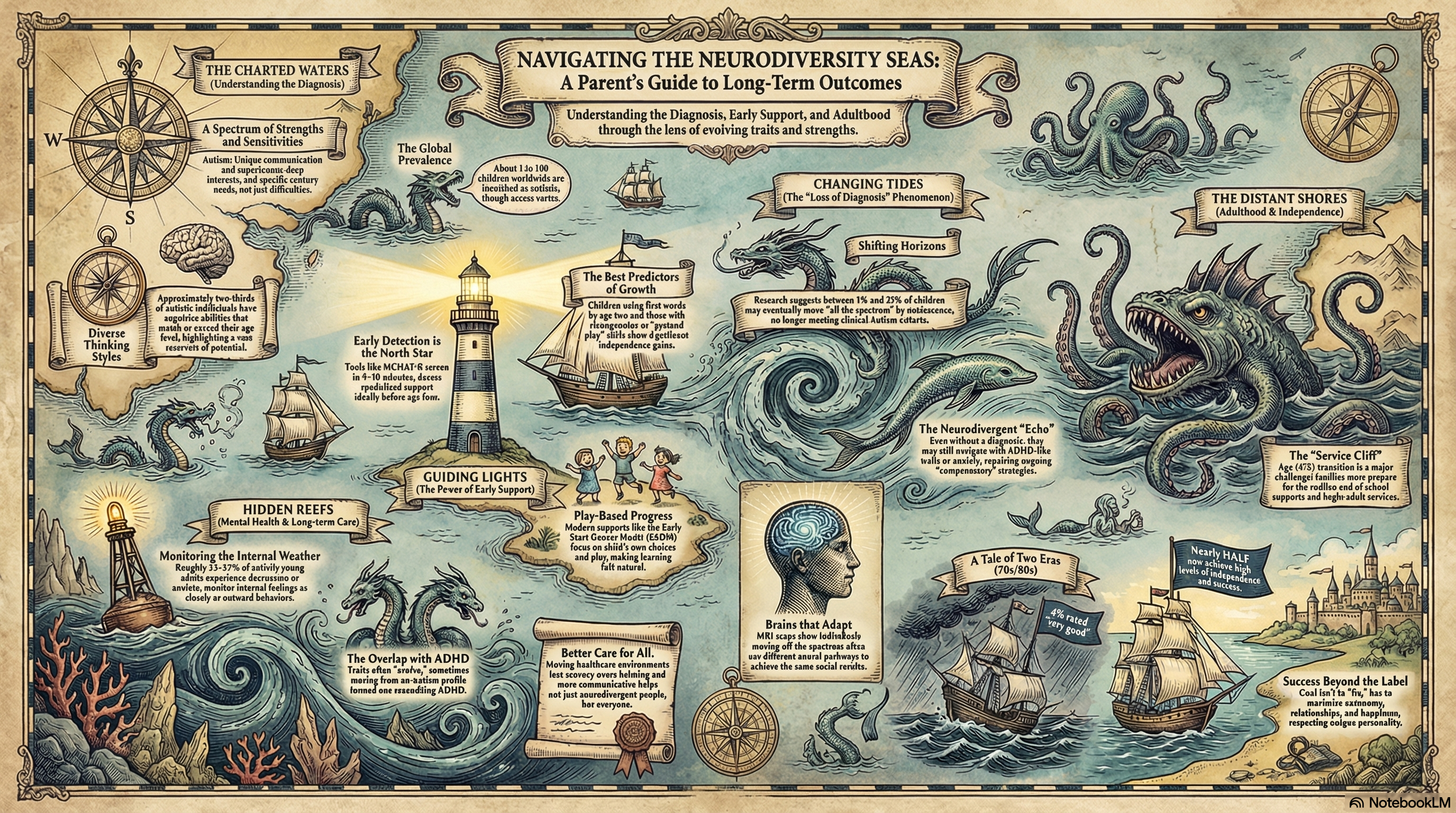
What This Paper Found
This research looks at the long-term horizon for autistic adults, acknowledging that the waters look very different for everyone. While many face significant challenges with communication or intellectual disability, about two-thirds of autistic individuals have cognitive skills right in the typical range. However, having those skills doesn’t always lead to a smooth passage; only about half of that group graduates college, and only a quarter find full-time work.
The good news is that these outcomes are improving over time. As we get better at spotting neurodivergence early and providing the right support, more people are finding their way to independence. Interestingly, the study suggests that between 10% and 20% of children may eventually move off the diagnostic threshold entirely by the time they reach their teens, though the journey remains unique for every family.
Why This Matters for Your Family
For many of us, the transition out of the school system at age 18 or 21 feels like sailing off the edge of the map. Researchers often call this “the cliff”—that moment when the structured support of the school harbor vanishes, leaving families to navigate the open ocean of adulthood alone. This research validates that feeling of isolation and highlights why the transition to adulthood requires its own set of charts.
As co-parents, this is where our teamwork becomes the most vital piece of equipment on the ship. When we understand that early support isn’t about “fixing” our kids but about building their internal compass for the long voyage ahead, we can better align our efforts. Knowing that the adult world isn’t yet fully built for our neurodivergent kids means we have to work together to scout for inclusive spaces and career paths long before the school bus stops coming.
What You Can Do Today
- Start the “Adulthood” conversation early. You don’t need to have all the answers today, but sitting down with your co-parent to discuss what “independence” looks like for your specific child can help you prioritize which life skills to focus on during the school years.
- Focus on functional independence. Since the study shows that early support changes the long-term trajectory, look for therapies and tools that build self-advocacy and daily living skills rather than just classroom compliance.
- Audit your local “harbors” now. Research local vocational programs, community groups, or neurodiversity-friendly employers in your area while your child is still young, so that the eventual transition feels less like a sudden drop and more like a planned change in course.
The Original Paper
Eigsti, I. M. (2022). The Autism Constellation and Neurodiversity: Long-Term and Adult Outcomes in Autism Spectrum Disorder.
Safety Note: This research summary is for informational purposes only and does not constitute medical or therapeutic advice. Always consult qualified professionals for your family’s specific situation. If you or your child are in crisis, contact your local emergency services or one of these helplines: 988 Suicide & Crisis Lifeline (US) | Lifeline Australia: 13 11 14 | Samaritans UK: 116 123 | Need to Talk? NZ: 1737
Research Brief
Generated by NotebookLM from the original paper. Not a replacement for the peer-reviewed source.
Read Full Brief →