Neuroplasticity of children in autism spectrum disorder.
Chen Zilin, Wang Xu, Zhang Si, Han Fei
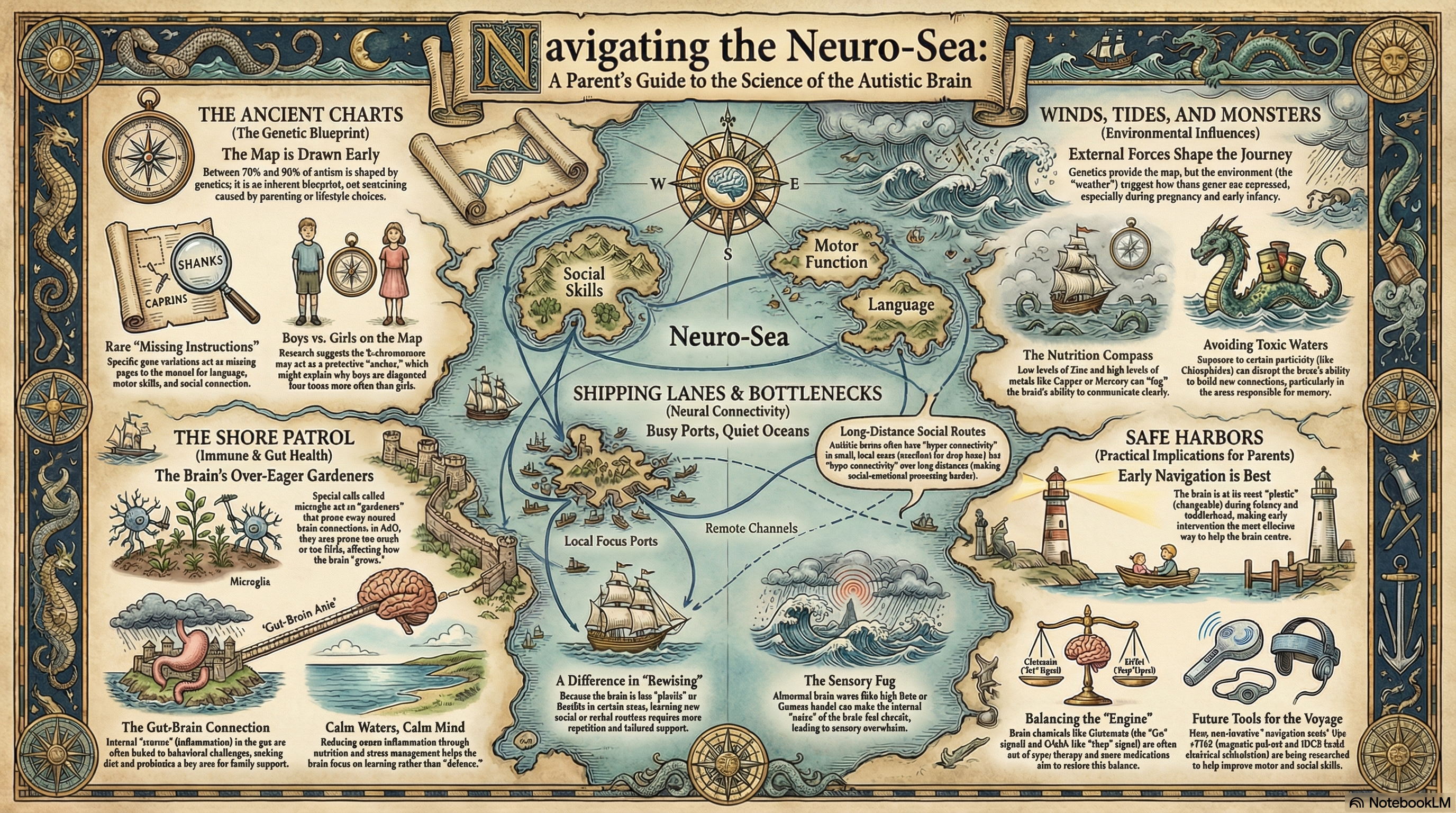
What This Paper Found
Scientists use a big word, “neuroplasticity,” to describe how the brain learns and changes its shape based on what’s happening in the world around it. Think of it like a ship’s crew constantly adjusting the rigging to catch the wind more effectively. For our autistic kids, this internal adjustment follows a different set of blueprints. Their brains are incredibly busy making connections, but those connections don’t always follow the standard paths we might expect.
The research highlights that these differences in wiring aren’t “broken” systems; they are unique adaptations to how information is processed. This explains why a child might find a crowded room overwhelming or struggle to read social cues that seem obvious to others. Instead of using a traditional map, their brain is charting a course through the world using a different set of coordinates entirely, focusing on details that others might miss while sometimes being overwhelmed by the “noise” of the environment.
Why This Matters for Your Family
When your child has a meltdown because the grocery store is too loud or a transition is too sudden, it’s easy to feel like you’re failing as a navigator. But this research reminds us that their brain is simply processing that “weather” differently than yours is. Understanding that their reactions are rooted in their physical wiring—not a desire to be difficult—can be the lighthouse that keeps you off the rocks during a stressful afternoon.
For co-parents, this provides a shared chart to work from. When both captains understand that the child’s brain is doing its best to adapt with the tools it has, it’s easier to stop the cycle of blame and start collaborating on environment-based solutions. It moves the conversation from “Why won’t they listen?” to “How is their brain receiving this signal right now?” This shift helps you work together as a team rather than pulling the helm in two different directions.
What You Can Do Today
- Lean into the “early tide.” Because the brain is at its most flexible during early childhood, seeking out neuro-affirming support now can help your child find more efficient ways to navigate. It’s not about “fixing” them, but about providing the right equipment for the voyage ahead.
- Adjust the environment, not just the child. If their brain processes sensory input uniquely, try changing the “waters” they are swimming in. Simple shifts, like reducing background noise or providing visual schedules, can significantly lower the cognitive load they are carrying.
- Swap “won’t” for “can’t right now.” When tensions rise, try to reframe the challenge as a wiring difference rather than a behavioral choice. This small change in perspective can help you and your co-parent stay calm and look for a strategy that actually aligns with how your child’s brain is currently functioning.
The Original Paper
Zilin, C., Xu, W., Si, Z., & Fei, H. (2026). Neuroplasticity of children in autism spectrum disorder.
Safety Note: This research summary is for informational purposes only and does not constitute medical or therapeutic advice. Always consult qualified professionals for your family’s specific situation. If you or your child are in crisis, contact your local emergency services or one of these helplines: 988 Suicide & Crisis Lifeline (US) | Lifeline Australia: 13 11 14 | Samaritans UK: 116 123 | Need to Talk? NZ: 1737
Research Brief
Generated by NotebookLM from the original paper. Not a replacement for the peer-reviewed source.
Read Full Brief →