Correlation between resilience and social support in mothers of young children with autism. Polish perspective.
Buchholz Aleksandra A
What This Paper Found
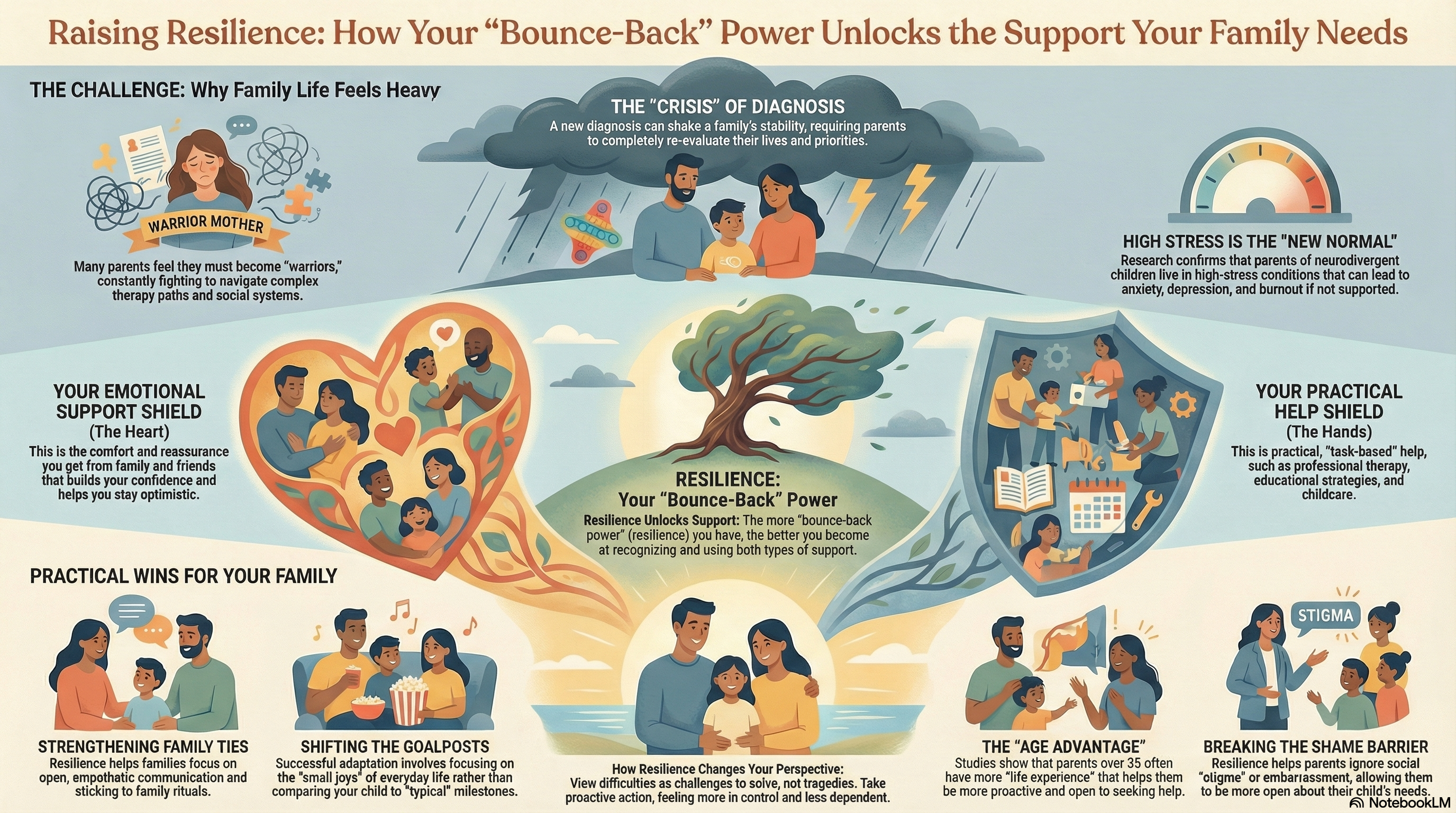
Researchers recently looked at how mothers of young autistic children navigate the daily demands of parenting while maintaining their own mental health. They found that resilience—the ability to keep going when things get tough—isn’t just a personality trait you’re born with. Instead, it is heavily tied to the “crew” you have around you. When mothers felt they had both a shoulder to lean on and hands to help with the heavy lifting, their ability to bounce back from difficult days increased significantly.
The study highlights two specific types of help that make a difference: emotional support (feeling heard and understood) and instrumental support (actual physical help with tasks). These support systems act like a breakwater, softening the impact of the stress that comes with an autism diagnosis and the intense caregiving that follows. By providing a buffer, this network helps lower the risk of the depression and anxiety that can often track alongside neurodivergent parenting.
Interestingly, the paper points out that your perception of being supported is just as vital as the help itself. Knowing that help is available, even before you call for it, changes how you experience stress. When you feel “held” by your community, your mental fuel tank stays fuller, which is the best defense we have against burnout in the face of intense caregiving demands.
Why This Matters for Your Family
We often hear that we need to be “strong” for our children, but this research reminds us that staying afloat is a team effort. For those of us navigating the choppy waters of neurodivergent parenting, trying to do it all in isolation is a recipe for exhaustion. Resilience isn’t about being “tougher”; it’s about being better connected. It suggests that when you reach out for help, you aren’t failing—you are actually performing a vital act of maintenance on your family’s most important resource: your own well-being.
This is especially true for the co-parenting relationship. When you and your partner (or your wider support network) can provide that mix of emotional validation and practical backup, you aren’t just surviving the week—you’re building a more stable environment for your child. Sharing the load doesn’t just make the work easier; it protects your mental health so you can stay present and regulated when your child needs you most.
What You Can Do Today
- Identify one “Instrumental” task. Think of one recurring, draining chore—like grocery shopping, laundry, or school admin—and ask a friend, family member, or your co-parent if they can take that specific weight off your shoulders this week.
- Schedule a “Deck Check.” Set aside ten minutes with a trusted person just to vent without looking for solutions. Simply being heard and validated provides the emotional support this study shows is critical for your resilience.
- Audit your support. Take a moment to list two or three people you know you could call in a true emergency. Reminding yourself that these people are in your harbor can actually lower your physiological stress levels right now.
The Original Paper
Buchholz, A. A. (2020). Correlation between resilience and social support in mothers of young children with autism. Polish perspective. Psychiatria i Psychologia Kliniczna.
Safety Note: This research summary is for informational purposes only and does not constitute medical or therapeutic advice. Always consult qualified professionals for your family’s specific situation. If you or your child are in crisis, contact your local emergency services or one of these helplines: 988 Suicide & Crisis Lifeline (US) | Lifeline Australia: 13 11 14 | Samaritans UK: 116 123 | Need to Talk? NZ: 1737
Research Brief
Generated by NotebookLM from the original paper. Not a replacement for the peer-reviewed source.
Read Full Brief →