A Systematic Review of Multiple Family Factors Associated with Oppositional Defiant Disorder.
Lin Xiuyun, He Ting, Heath Melissa, Chi Peilian, Hinshaw Stephen
What This Paper Found
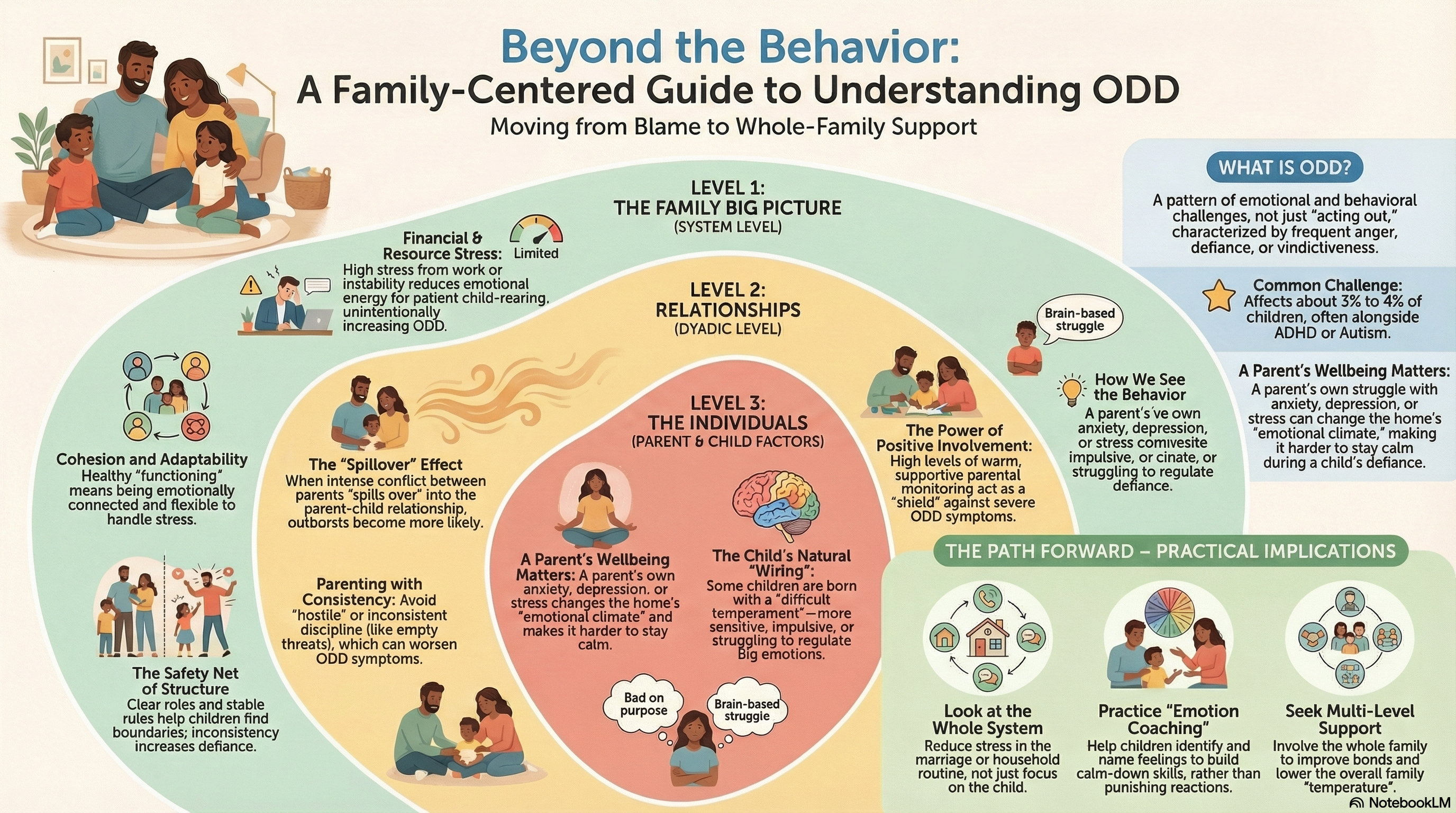
Researchers looked at 20 years of studies to understand why some children experience the intense anger and defiance we call ODD. They found that these behaviors don’t happen in isolation. Instead, they are often shaped by the “waters” of the entire family system. When a child is struggling, it is rarely just about their individual temperament; it is about how the whole family interacts.
The study identified three levels that influence a child’s behavior. It starts with the broad system—things like financial stress or general family chaos. Then it moves to the interaction between parents and the relationship between parent and child. Finally, it looks at individual factors like a parent’s own mental health or a child’s specific needs. The researchers found that these levels all lean on each other, meaning a change in one area can ripple through the rest.
Why This Matters for Your Family
For those of us co-parenting neurodivergent kids, this is a powerful reminder that we aren’t just managing one person’s behavior. We are managing a whole ecosystem. The paper highlights that the relationship between the “two captains” on the ship is one of the biggest factors in how ODD symptoms show up. When there is high conflict between parents, it can make it harder for a child to regulate their own emotions, as they are constantly reacting to the tension around them.
This isn’t about blaming ourselves. It’s about recognizing that the way we interact with each other and our children can either fuel the fire or help lower the temperature. When we focus on the family as a single vessel, we can start to see that “defiance” is often a signal that the environment has become too turbulent for the child to navigate. If we can steady the environment, the child often finds it easier to steady themselves.
What You Can Do Today
- Prioritize the “Co-Captain” relationship. Since conflict between parents is a major driver of symptoms, finding even small ways to reduce friction with your co-parent can help create a sense of safety for your child.
- Check the “Environmental Weather.” Look at the system-level stressors, like a chaotic schedule or high-sensory environments, and see where you can simplify. Reducing the overall pressure on the family often makes individual behaviors easier to handle.
- Shift from “Fixing” to “Interactions.” Instead of only focusing on the child’s outbursts, try observing the patterns of interaction that lead up to them. Sometimes a small change in how we respond or phrase a request can shift the energy of the entire house.
The Original Paper
Xiuyun, L., Ting, H., Melissa, H., Peilian, C., & Stephen, H. (2021). A systematic review of multiple family factors associated with oppositional defiant disorder. International Journal of Environmental Research and Public Health, 18(16), 8540.
Safety Note: This research summary is for informational purposes only and does not constitute medical or therapeutic advice. Always consult qualified professionals for your family’s specific situation. If you or your child are in crisis, contact your local emergency services or one of these helplines: 988 Suicide & Crisis Lifeline (US) | Lifeline Australia: 13 11 14 | Samaritans UK: 116 123 | Need to Talk? NZ: 1737
Research Brief
Generated by NotebookLM from the original paper. Not a replacement for the peer-reviewed source.
Read Full Brief →