Family life and autistic children with sensory processing differences: A qualitative evidence synthesis of occupational participation.
Daly Gina, Jackson Jeanne, Lynch Helen
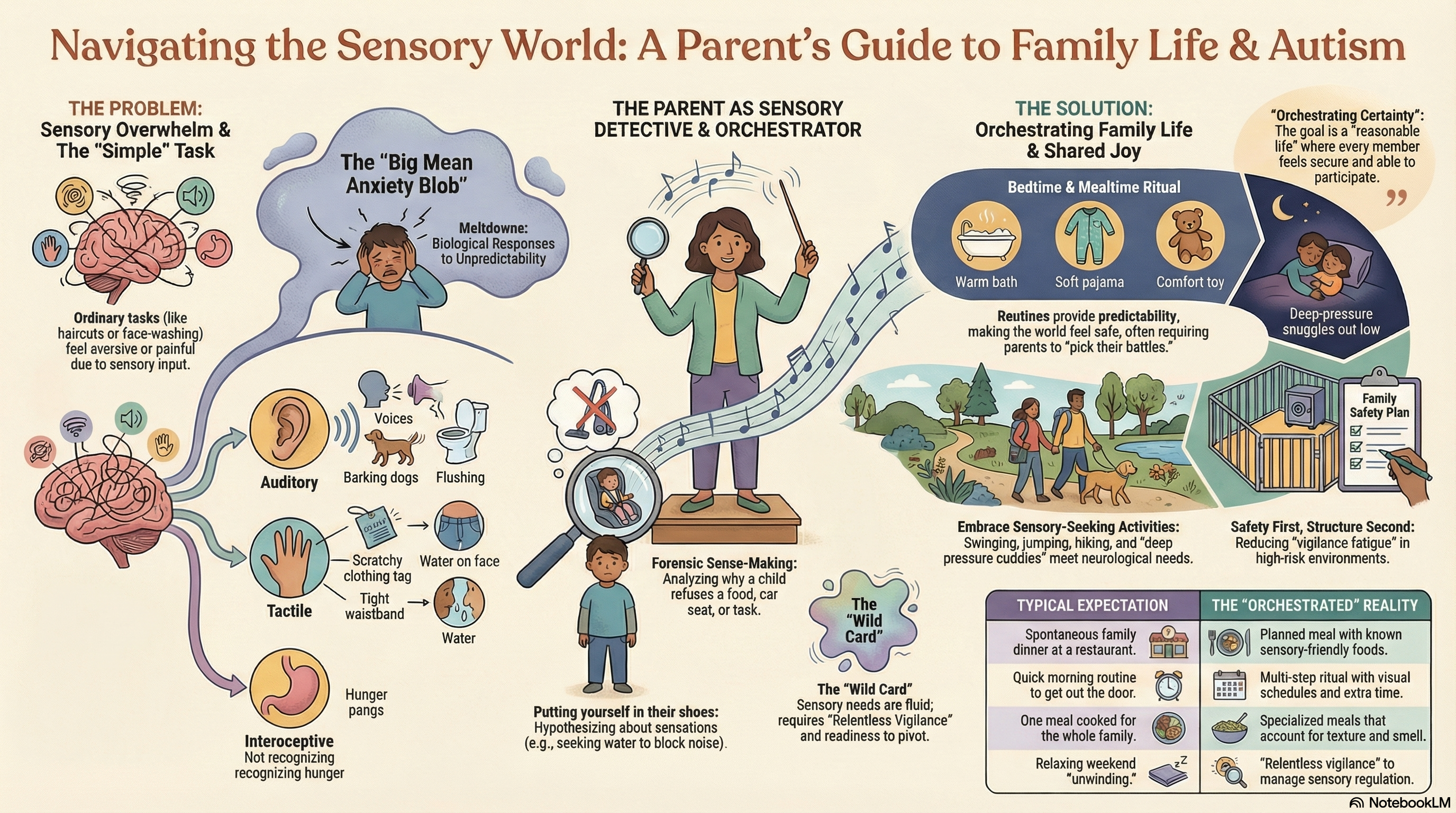
What This Paper Found
For too long, research on neurodivergent families has focused almost exclusively on the “storm”—the stress, the burden, and the things that aren’t working. This paper takes a refreshing turn by looking at how families actually succeed in navigating uncharted waters. The researchers reviewed two decades of studies to understand how parents and children with sensory processing differences manage to build meaningful lives together.
What they found is that successful families don’t just “cope”; they orchestrate. They discovered that because the sensory world is often unpredictable for an autistic child, the family’s primary role becomes “orchestrating certainty” through daily routines. It’s not about changing the child to fit the world, but about adjusting the sails of your daily life to match the weather of their specific sensory needs.
Why This Matters for Your Family
This matters because it moves the conversation away from “fixing” your child and toward “steadying the ship” for everyone. When we realize that sensory processing isn’t a choice or a behavior, but the literal landscape our family lives in, we can stop feeling like we’re failing and start acting like skilled navigators. It’s a shift from being reactive to being proactive, moving from survival mode into intentional parenting.
In a co-parenting dynamic, this research provides a shared map. Instead of debating “discipline,” we can focus on how we, as two captains, are building the structures that provide our children with the predictability they need. When we get the routines right, we’re not just avoiding a meltdown; we’re creating the space for our kids to actually participate in family life—the dinners, the outings, and the quiet moments—that they might otherwise miss.
What You Can Do Today
- Identify the sensory landscape. Spend a day looking at your environment through your child’s eyes. Note which “waters” are calm and which trigger a storm so you can plan your family’s route more effectively.
- Anchor your transitions. Choose one part of the day that feels chaotic and add a simple, repetitive routine. Predictability acts as a safe harbor for a brain that feels overwhelmed by sensory input.
- Focus on successful participation. Instead of listing what went wrong, identify one moment today where your child successfully engaged in a family activity. Recognizing what works is the foundation for building a stronger team.
The Original Paper
Daly, G., Jackson, J., & Lynch, H. (2021). Family life and autistic children with sensory processing differences: A qualitative evidence synthesis of occupational participation.
Safety Note: This research summary is for informational purposes only and does not constitute medical or therapeutic advice. Always consult qualified professionals for your family’s specific situation. If you or your child are in crisis, contact your local emergency services or one of these helplines: 988 Suicide & Crisis Lifeline (US) | Lifeline Australia: 13 11 14 | Samaritans UK: 116 123 | Need to Talk? NZ: 1737
Research Brief
Generated by NotebookLM from the original paper. Not a replacement for the peer-reviewed source.
Read Full Brief →