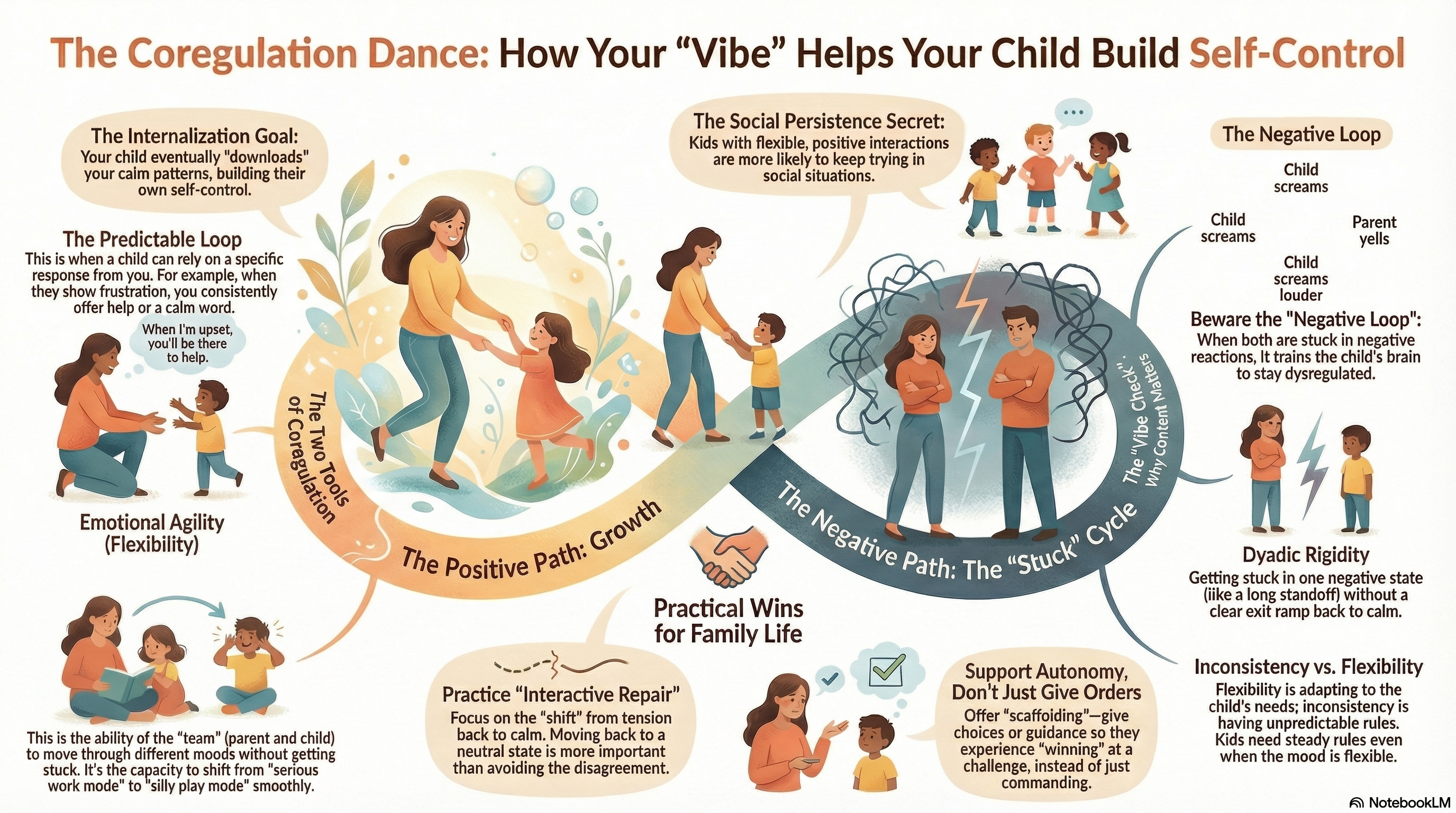
Understanding the parent-child coregulation patterns shaping child self-regulation.
Lobo Frances M, Lunkenheimer Erika
What This Paper Found
Parent-child coregulation, thought to support children’s burgeoning regulatory capacities, is the process by which parents and their children regulate one another through their goal-oriented behavior and expressed affect. Two particular coregulation patterns-dyadic contingency and dyadic flexibility-appear beneficial in early childhood, but their role in the typical development of self-regulation is not yet clear. The present study examined whether dynamic parent-child patterns of dyadic contingency and dyadic flexibility in both affect and goal-oriented behavior (e.g., discipline, compliance) predicted multiple components of preschoolers’ self-regulation. Mother-child dyads (
Why This Matters for Your Family
This research has practical implications for families navigating neurodivergence. Stay tuned for a detailed breakdown.
What You Can Do Today
- Review the original paper linked below for detailed findings
- Discuss with your child’s care team how these findings might apply
- Share with your co-parent to build shared understanding
Safety Note: This research summary is for informational purposes only and does not constitute medical or therapeutic advice. Always consult qualified professionals for your family’s specific situation. If you or your child are in crisis, contact your local emergency services or one of these helplines: 988 Suicide & Crisis Lifeline (US) | Lifeline Australia: 13 11 14 | Samaritans UK: 116 123 | Need to Talk? NZ: 1737