Decreased Amygdala Reactivity to Parent Cues Protects Against Anxiety Following Early Adversity: An Examination Across 3 Years.
Callaghan Bridget L, Gee Dylan G, Gabard-Durnam Laurel, Telzer Eva H, Humphreys Kathryn L, Goff Bonnie, Shapiro Mor, Flannery Jessica, Lumian Daniel S, Fareri Dominic S, Caldera Christina, Tottenham Nim
What This Paper Found
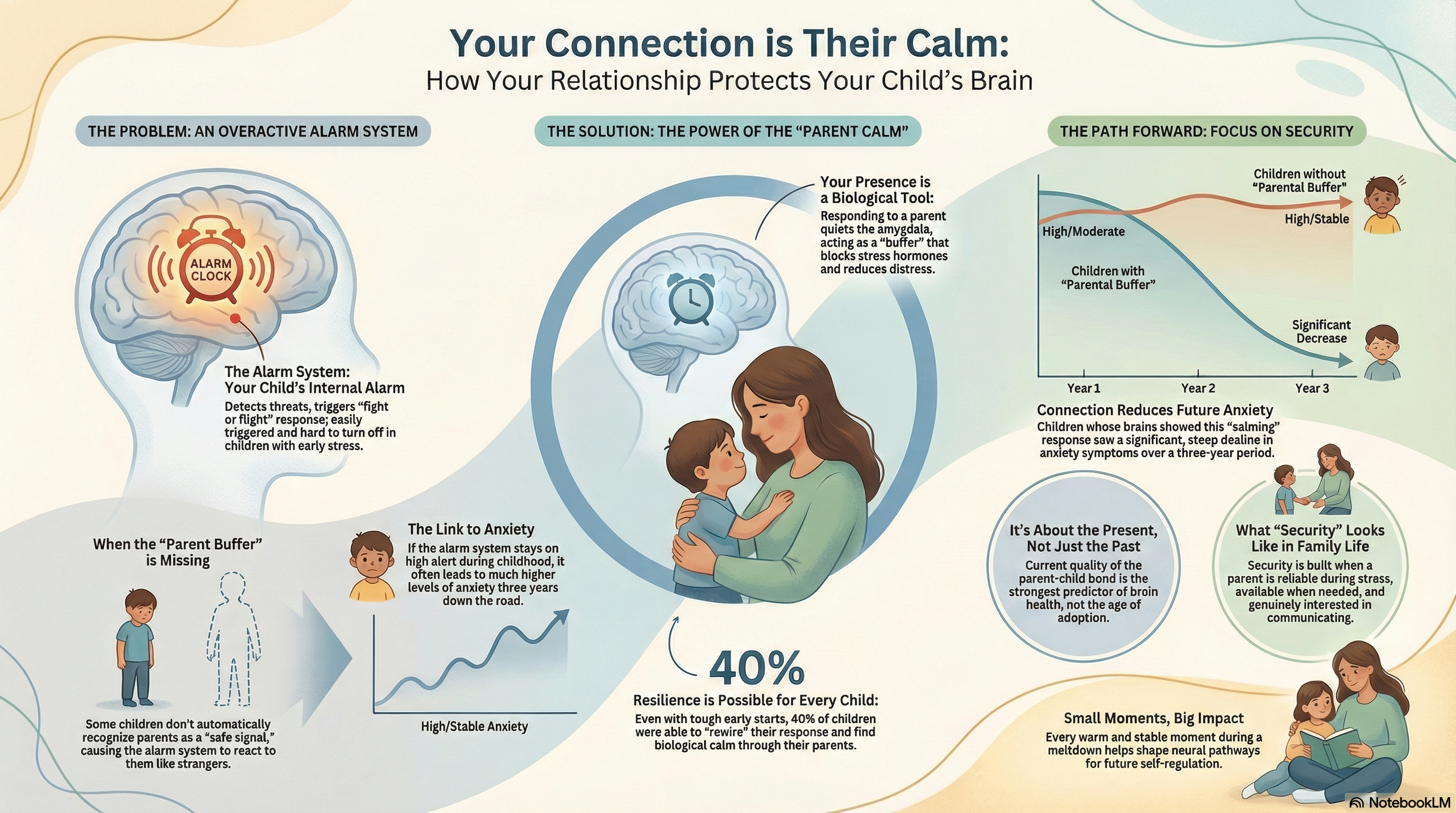
Researchers tracked how a child’s brain responds to the presence of a parent over a three-year period, specifically looking at the amygdala. This part of the brain acts like an internal smoke detector, scanning for danger and triggering the “fight or flight” response. The study found that even when children have experienced early stress or “rough waters” in their first years, a warm and consistent parent actually changes how that alarm system functions.
The data showed that just being near a responsive caregiver physically lowered the activity in the child’s amygdala. Over time, this biological “quieting” led to significantly lower levels of anxiety as the children grew. It suggests that our presence acts as a steadying hand on the tiller of their emotional ship, helping their brain feel safe enough to power down the alarm.
Why This Matters for Your Family
In our world, we often parent kids whose internal compasses are spinning or whose alarm systems are hypersensitive due to neurodivergence or past trauma. This research confirms that you don’t have to be a “perfect” parent to make a massive difference. You are a biological buffer. Your steady presence in the room—even if you aren’t “doing” anything special—helps your child’s brain “rewire” away from constant high alert.
For co-parents, this is a reminder that providing a safe harbor in both homes creates a cumulative effect. When a child knows that both captains are steering with a steady heart, their brain gets more opportunities to practice being calm. It isn’t about fixing the child; it’s about providing the environment where their nervous system can naturally find its level again.
What You Can Do Today
- Be the safe harbor. When your child is spiraling or anxious, remember that your physical proximity and calm breathing are doing invisible work on their nervous system, acting as a biological shield against stress.
- Prioritize “low-demand” connection. You don’t always need to be teaching or talking; sometimes just sitting nearby while they play or watch a show lets your presence act as a quiet anchor for their day.
- Share the biological win. If you are co-parenting, recognize that when either of you provides a warm, regulated moment, you are both contributing to the long-term “rewiring” of your child’s brain toward lower anxiety.
The Original Paper
Callaghan, B. L., Gee, D. G., Gabard-Durnam, L., Telzer, E. H., Humphreys, K. L., Goff, B., … & Tottenham, N. (2019). Decreased Amygdala Reactivity to Parent Cues Protects Against Anxiety Following Early Adversity: An Examination Across 3 Years. Biological Psychiatry.
Safety Note: This research summary is for informational purposes only and does not constitute medical or therapeutic advice. Always consult qualified professionals for your family’s specific situation. If you or your child are in crisis, contact your local emergency services or one of these helplines: 988 Suicide & Crisis Lifeline (US) | Lifeline Australia: 13 11 14 | Samaritans UK: 116 123 | Need to Talk? NZ: 1737
Research Brief
Generated by NotebookLM from the original paper. Not a replacement for the peer-reviewed source.
Read Full Brief →