Examining the utilisation and usefulness of social support for mothers with young children with autism spectrum disorder.
McIntyre Laura Lee, Brown Mallory
What This Paper Found
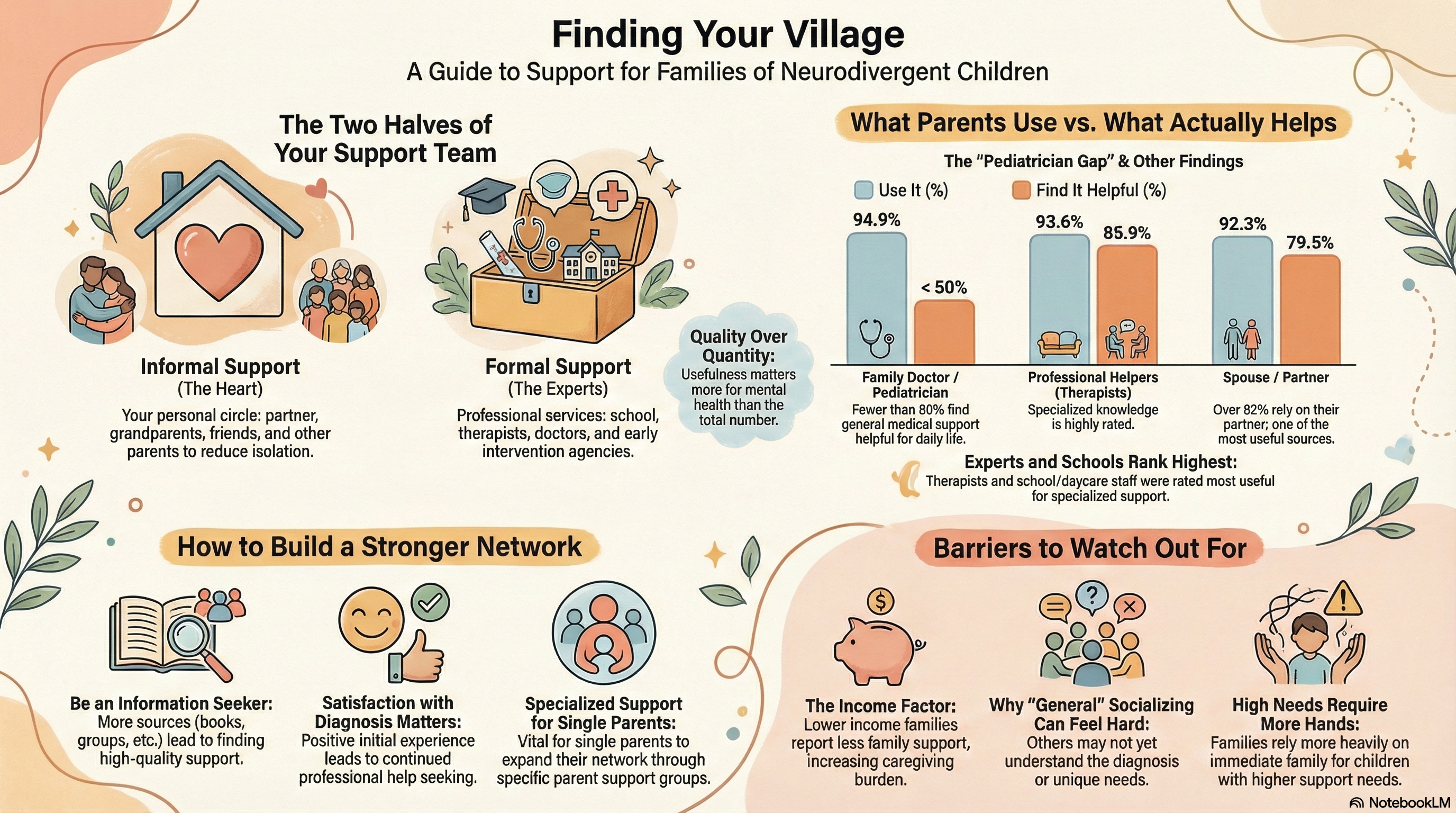
This study looked at the lifelines we use to stay afloat when raising a young autistic child. The researchers discovered that the most effective relief from the heavy weather of parenting doesn’t come from just one source. Instead, it’s the combination of professional services—like therapists and specialists—and informal support from friends and family that truly helps manage the daily stress of caregiving.
They also found that our own perspective plays a surprising role in how much help we actually get. When we can hold a positive outlook on our child’s unique way of being, we tend to find it easier to connect with others and benefit from the support networks around us. It’s as if looking for the beauty in the landscape makes us more likely to spot the other travelers waiting to help us along the way.
Finally, the research emphasized that getting accurate, clear information early in the diagnostic process isn’t just a “nice to have”—it’s a critical foundation. Having the right facts early on acts like a reliable chart for your voyage, helping you build a support system that actually lasts rather than one that crumbles when the first storm hits.
Why This Matters for Your Family
If you’ve ever felt like you’re rowing a heavy boat in circles, this research validates that feeling. It reminds us that no two parents—no matter how dedicated—are meant to be the entire crew. For co-parents, this is a signal to look at your “village” not as a luxury, but as a vital piece of your family’s equipment. When you and your co-captain prioritize building a mix of professional and personal support, you create a buffer that protects your relationship and your child’s well-being.
In the thick of meltdowns or school meetings, it’s easy to pull inward and try to “tough it out” alone. However, the science suggests that reaching out is actually the more productive move for your mental health. By sharing the load with both experts and those who just love you, you ensure that neither parent ends up completely submerged by the demands of the day.
This also highlights the importance of how we talk about our kids with each other. If we can focus on their strengths and unique traits during our “handover” moments, we’re not just being optimistic—we’re actively making it easier for our family to stay connected to the community. It’s about keeping the harbor entrance clear so that help can actually reach us when we need it.
What You Can Do Today
- Audit your current crew. Sit down with your co-parent and list who you currently lean on, including both the “pros” (doctors, teachers) and the “informals” (grandparents, that one friend who gets it). If your list is heavy on one side, talk about one person or service you could add to balance things out.
- Find one “lived experience” connection. If you don’t have a friend who “gets” neurodiversity, seek out one local or online parent group where you don’t have to explain your child’s behavior. Having a space where you can speak the same language as other parents provides a type of relief that even the best professional services can’t match.
- Fact-check your charts. Pick one specific challenge you’re currently facing and find one reputable, neurodiversity-affirming article or resource about it. Share it with your co-parent so you are both navigating from the same set of facts, reducing the stress of guessing which way to steer.
The Original Paper
McIntyre, L. L., & Brown, M. (2018). Examining the utilisation and usefulness of social support for mothers with young children with autism spectrum disorder. Journal of Intellectual & Developmental Disability.
Safety Note: This research summary is for informational purposes only and does not constitute medical or therapeutic advice. Always consult qualified professionals for your family’s specific situation. If you or your child are in crisis, contact your local emergency services or one of these helplines: 988 Suicide & Crisis Lifeline (US) | Lifeline Australia: 13 11 14 | Samaritans UK: 116 123 | Need to Talk? NZ: 1737