A 14-month randomized clinical trial of treatment strategies for attention-deficit/hyperactivity disorder. The MTA Cooperative Group. Multimodal Treatment Study of Children with ADHD.
MTA Cooperative Group
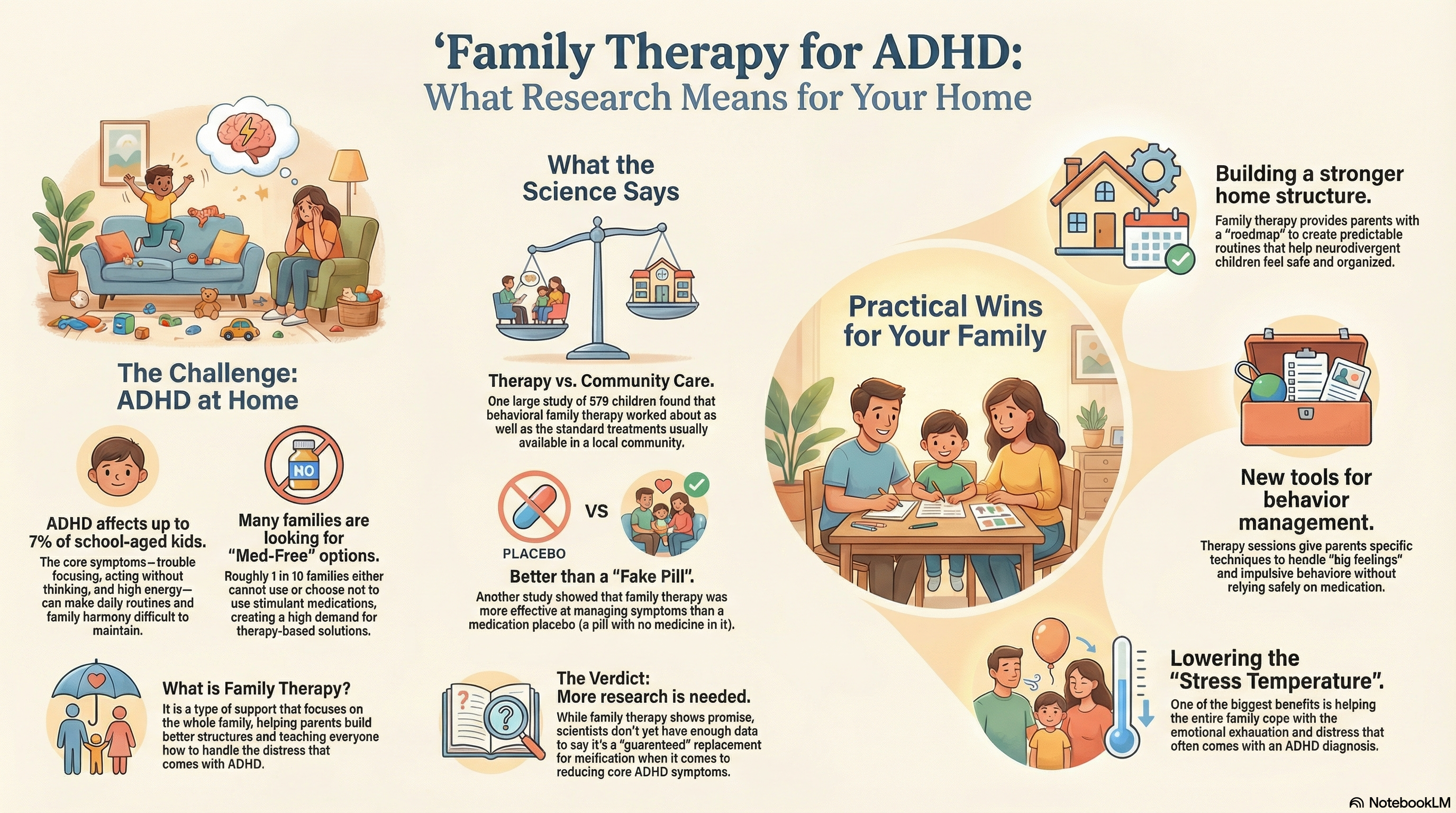
What This Paper Found
The MTA study followed families for over a year to see how different navigation styles affected ADHD children. Researchers compared medication, behavior therapy, and a combination of both. They found that while medication was often effective for calming the choppy waters of core symptoms like hyperactivity in the short term, many families looked to therapy to build the long-term structure and coping skills medication can’t provide on its own.
The study highlighted a truth many of us feel: there is no single “right” way to steer the ship. While family therapy alone didn’t necessarily change a child’s core ADHD traits more than standard community support, it was a powerful tool for lowering household stress. It helped parents build the practical frameworks needed to handle challenging behaviors without the entire family feeling constantly overwhelmed.
Why This Matters for Your Family
If you’ve ever felt like therapy wasn’t “working” because your child is still impulsive, this research offers a lighthouse in the fog. It suggests that therapy isn’t always about changing the child’s brain; it’s about changing the environment around them. It helps the two captains—you and your co-parent—stay synchronized so the household doesn’t feel like it’s constantly taking on water.
For families who want to avoid medication or simply want more tools in their kit, this paper validates the hard work of building coping skills. Even if therapy doesn’t “fix” the ADHD traits, it can make the voyage smoother by reducing conflict and helping parents feel more capable. It reminds us that managing the stress of the home is just as important as managing the symptoms of the child.
What You Can Do Today
- Focus on the environment, not the trait. Instead of trying to “stop” an ADHD behavior, look for ways to adjust your home’s rhythm to accommodate it, such as using visual schedules or clear transition cues.
- Sync your charts with your co-parent. Have a quick “check-the-compass” meeting to agree on one specific routine, ensuring you are both using the same language and expectations to reduce your child’s confusion.
- Acknowledge the value of a calmer home. Give yourself permission to see “reduced household tension” as a major victory, even if the core ADHD symptoms remain exactly where they were.
The Original Paper
MTA Cooperative Group. (1999). A 14-month randomized clinical trial of treatment strategies for attention-deficit/hyperactivity disorder. Archives of General Psychiatry, 56(12), 1073-1086.
Safety Note: This research summary is for informational purposes only and does not constitute medical or therapeutic advice. Always consult qualified professionals for your family’s specific situation. If you or your child are in crisis, contact your local emergency services or one of these helplines: 988 Suicide & Crisis Lifeline (US) | Lifeline Australia: 13 11 14 | Samaritans UK: 116 123 | Need to Talk? NZ: 1737
Research Brief
Generated by NotebookLM from the original paper. Not a replacement for the peer-reviewed source.
Read Full Brief →