Two Captains One Ship - Building Your Co Parenting Team
Preview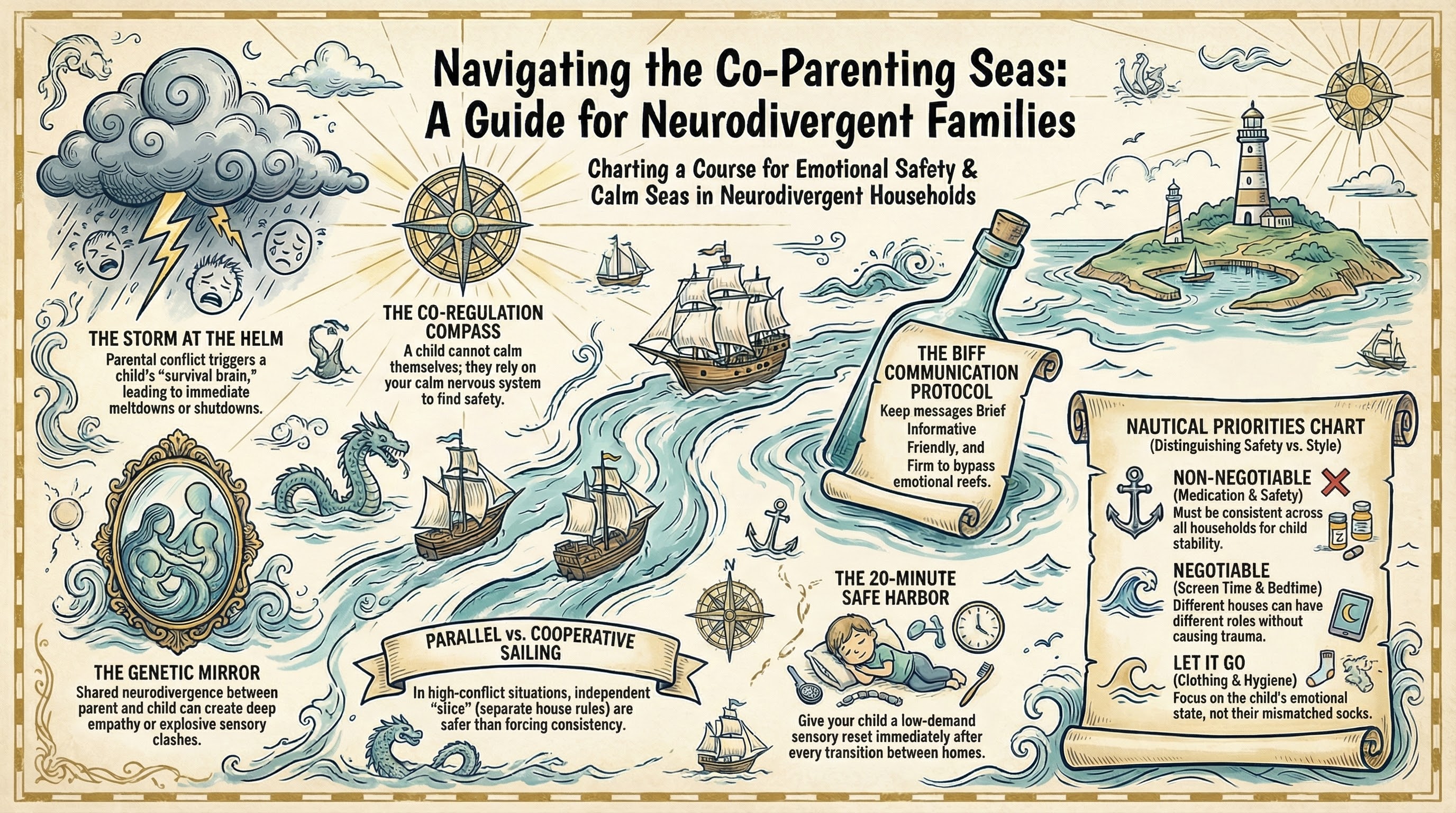
Quick Map: If you only read one page, read this
- The Shared Helm: You don't need to be friends, but you must be co-captains. Your child's regulation depends on your alignment.
- Neuroception of Danger: Conflict between parents triggers the child's survival brain. A storm at the helm creates a gale on deck.
- The Co-Regulation Key: A dysregulated parent cannot calm a dysregulated child. Your calm is their primary navigational aid.
- Parenting Models: From "Cooperative" (unified) to "Parallel" (independent silos), choose the model that reduces conflict.
- The BIFF Method: Keep communication Brief, Informative, Friendly, and Firm to bypass emotional reefs.
Field Guide: The Science of the Parental Alliance
What's happening in the brain/body: Neurodivergent children possess a sensitive "neuroception"—a subconscious system that scans for safety. When co-parents fight, the child's amygdala registers a "threat" signal. This knocks their thinking brain (prefrontal cortex) offline, triggering meltdowns or shutdowns. For parents, chronic conflict creates Betrayal Trauma, which rewires the brain to react to the ex-partner with a fight-or-flight response. This makes logical communication almost impossible without structured firewalls.
What it looks like at home: A simple handoff becomes a "rogue wave" of tension. The child "acts out" the moment she senses a disagreement. You feel your heart race when a text notification from the other parent appears. One parent acts as the "Project Manager" (carrying the mental load), while the other feels like a "Deckhand" (doing only what they're told), leading to deep resentment and burnout.
What helps:
- Communication Firewalls: Use apps like OurFamilyWizard to keep logistics out of your personal texts
- The BIFF Method: Keep all messages Brief, Informative, Friendly, and Firm
- Parallel Parenting: If conflict is high, stop trying to be consistent and focus on being peaceful in separate silos
- The 20-Minute Buffer: Allow the child a "low-demand" sensory reset after every transition
What backfires:
- "Winning" an argument at the child's expense—the child's nervous system is the ultimate loser
- Using the child as a messenger or a spy—this creates a "loyalty bind" that triggers chronic anxiety
- Triangulating family or friends against the other parent—this increases the overall "sea state" of stress
- Expecting "Total Consistency" in high-conflict cases—this usually just leads to more fighting
One sentence to remember: "Your relationship is the environment; if the environment is a storm, the child cannot find their compass."
Introduction: Mapping the Alliance
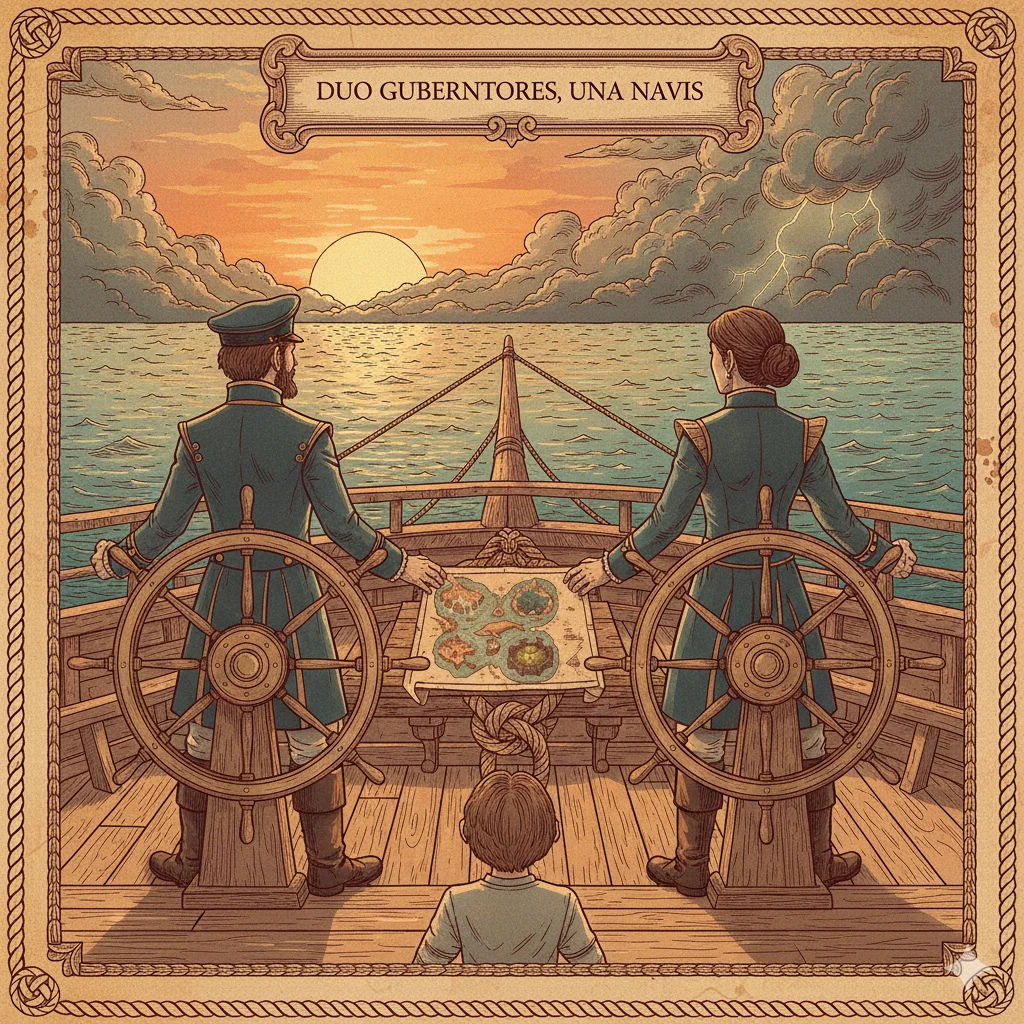
If the neurodivergent family unit is a crew, the parents are its co-captains. In the choppy waters of ADHD, ASD, PDA, and ODD, the challenges are structural. The crew must withstand the sudden landslides of dopamine-seeking and the pressure of sensory overload. For the voyage to survive, the captains must agree on the destination: the child's safety and autonomy.
The wake of neurodivergent parenting is often littered with fractured alliances. This isn't due to a lack of love, but leadership misalignment. Parents of ADHD children show elevated divorce risk compared with comparison families.¹ While the "80% divorce rate" for autism is a myth, the strain is real and significant.³
The physiological toll is high. Parents of autistic children report significantly higher parenting stress than parents of neurotypical children.⁶ This chronic strain means conflict is often a physiological inevitability. This chapter is a manual for the leadership team. It examines the neuroscience of conflict and how to build a unified system that functions as an external cortex for the child.
Continue Reading
Unlock the full content including Tactical Strategies, Parent Toolkit, and Survival Card.
Get Full AccessPay what you can - from $5